
Senior Living & Care Scam
How fraudulent senior care services, fake facilities, and financial exploitation target older adults and their families during one of life's most stressful decisions
Senior living and care scams exploit the vulnerability of older adults who depend on others for their wellbeing - and the anxiety of family members making one of the most emotionally and financially significant decisions of their lives.
In This Guide
- Overview of the Scam
- How the Scam Works
- Common Variations
- Example Scam Messages or Pop-Ups
- Warning Signs
- Who Scammers Often Target
- What the Scammer Is Trying to Achieve
- What To Do If You Encounter This Scam
- If You Already Paid or Shared Information
- How To Prevent Senior Living & Care Scams
- Final Safety Advice
Overview of the Scam
Senior living and care scams encompass a range of fraudulent schemes that target older adults who require or are considering care services - and the families responsible for making those arrangements. These scams include fake placement agencies, unlicensed care facilities, financial exploitation by caregivers, and high-pressure sales practices that steer families toward inappropriate or overpriced care options.
The senior care market is large, emotionally charged, and complex - qualities that scammers exploit. Families making care decisions are often under time pressure, emotionally stressed, and unfamiliar with the regulatory landscape of senior care services. Older adults in care settings may be isolated, cognitively impaired, or financially dependent on people who have opportunities to exploit them.
This guide covers both the external scams targeting families during the care placement process and the financial exploitation that can occur within care settings - because both represent significant and underreported forms of elder financial fraud.
How the Scam Works
Senior care scams operate through several different pathways depending on the specific type of fraud involved.
- A family searching for senior care options encounters a referral service, placement agency, or care provider through online advertising, a call center, or a direct solicitation. The service appears knowledgeable and helpful and offers to guide them through the placement process at no apparent cost to the family.
- The placement agency recommends specific facilities - typically those that pay the highest referral fees to the agency rather than those that best match the resident's needs. The family, trusting the agency's expertise, follows the recommendation without realizing the recommendation is financially motivated.
- Large upfront fees are collected - described as community fees, deposits, or administrative charges - before services are fully disclosed or the quality of care can be assessed. Some facilities charge entrance fees that are difficult or impossible to recover if the resident needs to leave.
- Once a resident is placed, financial exploitation may occur through caregivers or facility staff who develop trust relationships with isolated residents. This can range from theft of personal belongings to persuading residents to change their wills, add a caregiver to financial accounts, or make large cash gifts.
- Families who discover problems face significant barriers to remedy - the resident may be reluctant to leave a familiar environment, contracts may include unfavorable arbitration clauses, and recovering funds paid to a fraudulent facility is difficult.
Common Variations
Senior care fraud takes several distinct forms across the care placement and ongoing care process.
- Biased placement agency: An agency presents itself as a neutral guide to senior care options but steers families toward facilities that pay the highest referral fees, regardless of quality or fit. The family may not realize the agency's recommendations are financially motivated.
- Unlicensed care facility: A residential care home or assisted living facility operates without proper licensing, inspection, or staffing standards. The home may appear comfortable on a brief visit but lack the trained staff, safety systems, and regulatory oversight of a licensed facility.
- Caregiver financial exploitation: A trusted in-home caregiver gradually gains influence over an older adult's financial decisions - being added to bank accounts, named in updated estate documents, or receiving large cash gifts. This is among the most common and underreported forms of elder financial abuse.
- Memory care facility fraud: Residents in memory care who cannot accurately report or recall events are at particular risk of theft, overbilling for services not rendered, or having personal funds misused by facility staff.
- High-pressure senior living sales: A continuing care retirement community uses high-pressure sales tactics to collect large entrance fees - sometimes $100,000 or more - with complex refund policies that make leaving or recovering funds extremely difficult.
Example Scam Messages or Pop-Ups
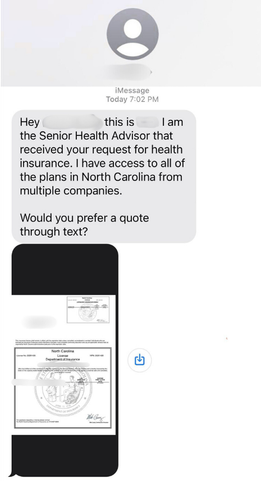
The example below shows the type of marketing and sales approach used by fraudulent or predatory senior care services. The appearance of helpfulness and expertise masks the underlying financial conflicts of interest.

The service appears to offer free, unbiased guidance through an overwhelming decision. The conflict of interest - that the agency is paid by the facilities it recommends - is either not disclosed or is buried in fine print. Families who are emotionally overwhelmed and trusting of the agency's apparent expertise may not recognize that the recommendations they receive are shaped by financial incentives that have nothing to do with their family member's needs or preferences.
Common language includes: "Our senior care advisors help families find the perfect care solution at no cost to you - we work with over 300 local facilities to match your loved one's needs," and "We handle all the paperwork and negotiation - just a small community fee secures your spot and we can move your mother in as early as next week." The urgency and apparent efficiency are designed to move families past the due diligence they would otherwise apply.
Warning Signs
These signals indicate that a senior care service, facility, or caregiver may be operating fraudulently or exploitatively.
- A placement agency does not disclose whether - or how much - it receives from facilities for referrals. Any placement service that does not proactively disclose this should be asked directly.
- A facility cannot or will not provide their current state inspection reports, licensing status, or staffing ratios. This information is public record and should be readily available.
- Significant upfront fees are required before you have had time to thoroughly review contracts, visit the facility during unannounced hours, or verify the terms of refund policies.
- A caregiver discourages contact between the older adult and their family, or seems to be cultivating an unusually close financial relationship with the person they are caring for.
- An older adult's financial accounts show unusual activity - large cash withdrawals, transfers to unfamiliar recipients, or changes to beneficiary designations - that the adult cannot clearly explain or that seem inconsistent with their prior financial behavior.
- A facility uses arbitration clauses that prevent residents or families from suing in court if problems arise - particularly problematic in memory care settings where residents cannot advocate for themselves.
- A salesperson creates urgency - "we only have one room available, and we have two families looking at it" - to pressure a decision before you have had time to visit competing facilities or review contracts carefully.
Who Scammers Often Target
Senior care scams target both older adults directly and the family members making care decisions on their behalf. Older adults with cognitive impairment are at heightened risk because they are less able to recognize exploitation, less able to report it accurately, and more dependent on the very people who may be exploiting them.
Families making urgent care placements - following a hospitalization, a fall, or a sudden decline - are particularly vulnerable because the time pressure prevents the thorough due diligence that would otherwise protect them. The combination of emotional stress and limited time creates the same vulnerability that other scams manufacture artificially.
Isolated older adults - those without close family involvement in their daily lives - are at greatest risk of ongoing financial exploitation by caregivers, because there is no family member reviewing accounts, observing relationships, or noticing changes in behavior that might indicate a problem.
What the Scammer Is Trying to Achieve
Fraudulent placement agencies seek referral fees from facilities they recommend, regardless of whether those facilities are appropriate for the resident. Predatory facilities seek entrance fees, monthly fees, and ancillary charges that may exceed what was represented. Individual caregivers who engage in financial exploitation seek direct financial benefit - theft, gifts, changes to estate documents, or being named as beneficiaries.
The common thread is that the wellbeing of the older adult is secondary to the financial benefit of the person or entity providing the service. In the worst cases, the exploitation continues for months or years before it is detected - because the victim cannot report it and the family has no visibility into what is happening.
What To Do If You Encounter This Scam
If you are making senior care decisions and have concerns about a service, facility, or caregiver, here is how to protect yourself and your family member.
- Research any facility through your state's long-term care ombudsman program and licensing agency before visiting. State inspection reports are public record and reveal complaint history and deficiencies.
- Visit facilities unannounced - during evenings and weekends, not just during scheduled tours - to observe the actual quality of care and interaction between staff and residents.
- Ask placement agencies directly whether they receive referral fees from facilities and how much. Use this information to interpret their recommendations critically.
- Have all contracts reviewed by an independent attorney before signing, particularly for continuing care retirement communities with large entrance fees or complex refund policies.
- Establish regular review of a loved one's financial accounts and estate documents. Consider setting up account alerts for unusual transactions.
How To Prevent Senior Living & Care Scams
These habits protect older adults and their families during the care placement process and ongoing care.
- Research facilities independently through state licensing agencies and ombudsman programs before engaging any placement service. Building your own knowledge of the options available makes you less dependent on paid referral services.
- Ask placement agencies about their compensation structure before accepting their guidance. Knowing that they are paid by facilities helps you evaluate their recommendations appropriately.
- Maintain regular, direct contact with a loved one in a care setting - visit unannounced, review financial statements regularly, and pay attention to changes in mood, behavior, or financial activity.
- Consider establishing a durable power of attorney and healthcare proxy with a trusted family member or attorney early - before a crisis - so that financial and healthcare decisions can be managed by someone you trust rather than falling to whoever is most present at a moment of acute need.
- Trust your instincts. If something about a care situation feels wrong - if a caregiver seems too financially interested, if a facility's explanation of charges does not add up, if a loved one seems fearful or withdrawn - investigate further rather than deferring to the people being questioned.
Final Safety Advice
Senior care decisions are among the most consequential and emotionally demanding that families face. The combination of love, fear, complexity, and time pressure creates conditions in which fraud and exploitation can take root - not because families are careless, but because they are human beings navigating an overwhelming situation without the luxury of unhurried deliberation.
The most protective habits - researching facilities independently, reviewing financial accounts regularly, visiting unannounced, and maintaining close communication with a loved one in care - are also the habits of any attentive, caring family member. They do not require assuming the worst about care providers. They simply ensure that you remain informed and present enough to notice if something goes wrong.
If you believe exploitation has occurred, report it to Adult Protective Services and your state's long-term care ombudsman. These systems exist specifically to protect older adults in care settings, and the people who staff them understand these situations deeply. Reaching out for help is always the right response.