Prescription Drug Scam
How fraudulent online pharmacies, counterfeit medications, and drug discount scams put your health and finances at serious risk
Fraudulent online pharmacies look nearly identical to legitimate ones. The medications they ship may be counterfeit, contaminated, wrong dosage, or entirely different drugs - creating health risks that compound the financial loss.
In This Guide
- Overview of the Scam
- How the Scam Works
- Common Variations
- Example Scam Messages or Pop-Ups
- Warning Signs
- Who Scammers Often Target
- What the Scammer Is Trying to Achieve
- What To Do If You Encounter This Scam
- If You Already Paid or Shared Information
- How To Prevent Prescription Drug Scams
- Final Safety Advice
Overview of the Scam
Prescription drug scams involve fraudulent online pharmacies, counterfeit medication schemes, and fake drug discount programs that take advantage of people trying to manage high medication costs. The financial harm is significant - but the health risk is often greater, because medications obtained through fraudulent channels may contain wrong ingredients, incorrect dosages, dangerous contaminants, or no active ingredient at all.
The motivation driving most people toward online drug purchases is genuine and understandable: prescription medication costs in the United States are among the highest in the world, and many people - particularly older adults on fixed incomes who take multiple medications - face real financial hardship managing these costs. Scammers position their fraudulent offerings precisely where this need is greatest: advertising deeply discounted prices for commonly prescribed medications.
Protecting yourself in this area requires knowing both how to find legitimate lower-cost medication options and how to identify the fraudulent pharmacies and discount programs designed to exploit people who are searching for them.
How the Scam Works
Prescription drug scams reach victims primarily through online advertising, email, and search engine results targeting people searching for lower medication costs.
- You search online for a medication by name or for ways to reduce prescription costs, and encounter an advertisement or search result for a website offering the medication at a dramatically lower price than local pharmacies - sometimes 70 to 90 percent less than US retail prices.
- The website looks like a legitimate pharmacy. It has a professional design, customer reviews, and a process that mimics a real pharmacy transaction. Some sites ask for a prescription; others dispense controlled medications without one - which is itself a serious warning sign.
- You provide your payment information and shipping address and complete the order. The site charges your card and provides an order confirmation.
- Either nothing arrives, or a package arrives containing medications that are counterfeit, subpotent, wrongly labeled, or entirely different from what was ordered. Because the packaging may look authentic, you may take the medication without realizing it is not what you think it is.
- Your payment card details and personal information may also be used for additional fraudulent charges independent of the pharmacy transaction.
Common Variations
Prescription drug fraud takes several forms beyond fake online pharmacies.
- Fake online pharmacy: The most common version. A website sells prescription medications - often without requiring a prescription - at dramatically discounted prices. The medications shipped are counterfeit, substandard, or simply never arrive.
- Drug discount card scam: A company markets a prescription discount card with claims of significant savings. The card either provides no actual discount at participating pharmacies, charges a monthly fee for minimal benefit, or collects personal information for resale.
- Unsolicited drug solicitation: Emails, texts, or robocalls offer access to discounted prescription medications, weight loss drugs, or supplements. These solicitations may be for unregulated products, counterfeit medications, or a phishing attempt for personal and financial information.
- Unregulated supplement scam: Products marketed using medical-sounding language and claims of treating or curing conditions are sold as supplements to avoid FDA oversight. The products may be ineffective, mislabeled, or contain unlisted ingredients including dangerous compounds.
- Medicare drug plan fraud: Callers claim to be from Medicare and offer to enroll you in a prescription drug plan or update your coverage - using this as a pretext to collect your Medicare ID number, Social Security number, and financial information.
Example Scam Messages or Pop-Ups
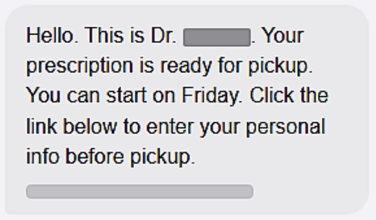
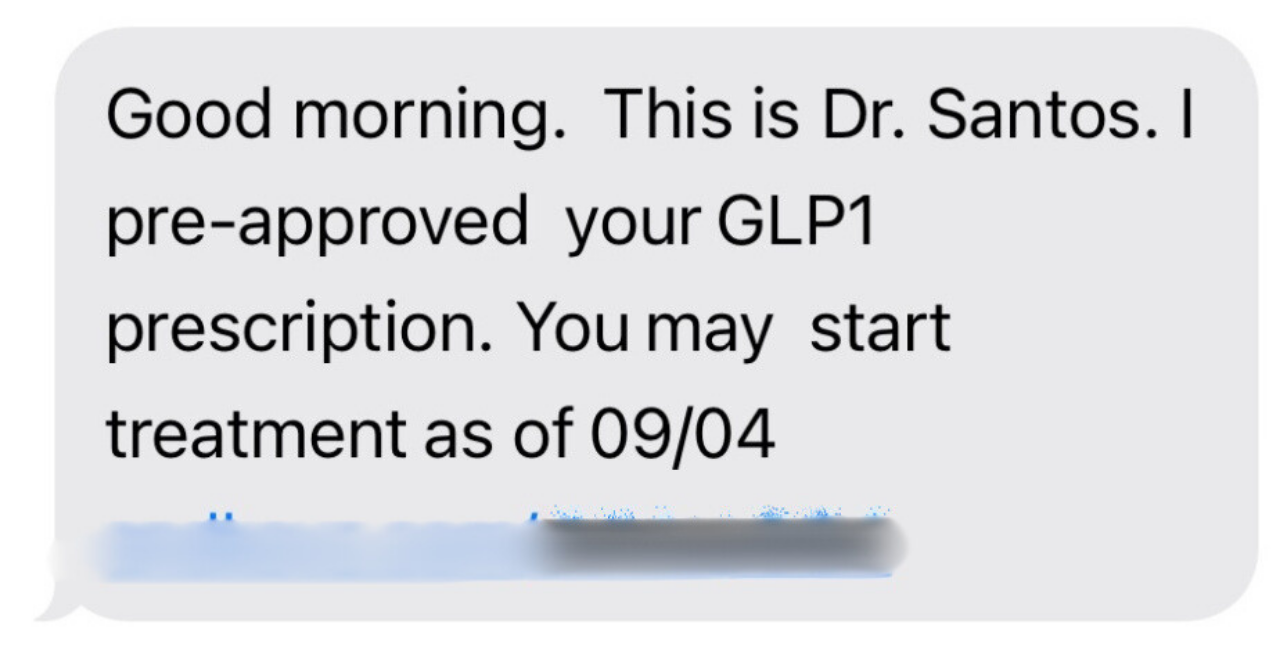
The example below shows how fraudulent online pharmacy advertising and solicitations typically appear. The price difference is the central appeal - and it is the central warning sign.
The advertised price is the most obvious signal. A medication that costs $300 per month at a US pharmacy does not legitimately sell for $25 from an online source - the economics of licensed pharmaceutical distribution do not allow for this kind of discount. The additional claims - no prescription required, ships within 24 hours, guaranteed authentic - are designed to address the concerns a careful buyer would have, not to provide actual assurance. Verification through NABP takes less than one minute and provides real protection.
Common solicitation language includes: "Get your prescriptions for up to 90% less - no insurance needed, no prescription required, fast discreet shipping," "Your neighbors are saving $200 a month on the same medications - click here to see your savings," and email subject lines like "Your medication refill is ready - confirm your address to ship."
Warning Signs
These signals indicate an online pharmacy or drug discount offer is fraudulent or unsafe.
- The pharmacy does not require a valid prescription for prescription medications, or accepts a simple online questionnaire as a substitute for a doctor's prescription.
- Prices are dramatically lower than any legitimate US or Canadian pharmacy - discounts of 70 percent or more on commonly prescribed medications are almost always a sign of counterfeit or substandard products.
- The pharmacy cannot be found in the NABP's list of verified online pharmacies at nabp.pharmacy, or does not display the VIPPS seal with a verifiable link.
- The website has no US address, no US phone number, or lists a contact address in a country known for counterfeit pharmaceutical manufacturing.
- The offer arrived unsolicited - through an email, text, or robocall you did not request.
- A "discount card" requires a monthly fee, requests extensive personal information, or cannot show you actual pricing at specific pharmacies before you sign up.
- A caller claims to be from Medicare and asks for your Medicare ID, Social Security number, or bank information to update your prescription drug coverage or enroll you in a new plan.
Who Scammers Often Target
Prescription drug scams primarily target older adults who take multiple prescription medications and face significant monthly out-of-pocket costs. People whose medications are not well covered by their insurance plan, those in the Medicare Part D coverage gap, and those on fixed incomes who genuinely cannot afford their prescriptions at US retail prices are the most likely to be searching for alternatives - and therefore the most likely to encounter fraudulent offers.
People managing chronic conditions - diabetes, heart disease, high blood pressure - who require ongoing medication are targeted repeatedly because their need is continuous and well-known to data aggregators who sell contact lists to fraudulent operators.
What the Scammer Is Trying to Achieve
The immediate goal is payment for medications that are counterfeit, substandard, or never delivered. The secondary goal is the payment card information and personal health data collected during the transaction, which has significant value for identity theft and for sale to other fraudulent operations.
In Medicare drug plan fraud, the goal is the Medicare ID number and Social Security number - which can be used to file fraudulent claims, redirect benefit payments, or enable broader identity theft.
What To Do If You Encounter This Scam
If you encounter an online pharmacy offer or drug discount solicitation that concerns you, here is how to evaluate it safely.
- Check the NABP's verified pharmacy list at nabp.pharmacy before ordering from any online pharmacy. This is the single most reliable verification step available.
- If a caller claims to be from Medicare about your prescription drug coverage, hang up and call Medicare directly at 1-800-MEDICARE to verify whether any changes to your coverage are actually needed.
- Explore legitimate lower-cost alternatives before turning to unverified online sources. GoodRx, NeedyMeds, and patient assistance programs offered by pharmaceutical manufacturers provide real savings through verified channels.
- Report fraudulent online pharmacies to the FDA at fda.gov/safety/report-problem-fda and to the FTC at ReportFraud.ftc.gov.
- If you received unsolicited email or text advertisements for prescription medications, report them as spam and do not click any links.
How To Prevent Prescription Drug Scams
Legitimate lower-cost medication options exist - and knowing what they are reduces the pressure to turn to unverified sources.
- Use NABP-verified pharmacies only for online medication purchases. The VIPPS seal at nabp.pharmacy identifies pharmacies that have been independently verified as operating legally and safely.
- Ask your doctor or pharmacist about generic alternatives, therapeutic substitutions, or patient assistance programs for any medication that is creating financial hardship. Legitimate savings are available through these channels.
- Use GoodRx, RxSaver, or similar legitimate prescription discount programs that show you actual prices at specific pharmacies near you. These services are free, require no personal information to use, and provide real discounts at verifiable pharmacies.
- Contact the pharmaceutical manufacturer directly for patient assistance programs - most major manufacturers offer free or deeply discounted medications for patients who meet income criteria.
- Be skeptical of unsolicited offers. Legitimate pharmacies and discount programs do not cold-call or send unsolicited emails advertising specific medications to people they have never served.
Final Safety Advice
Prescription drug scams are particularly serious because they involve your health as well as your finances. A medication that is counterfeit, substandard, or entirely different from what was ordered does not just fail to help - it can cause active harm, particularly for people managing serious chronic conditions where consistent, correctly dosed medication is essential.
The desire to find affordable medications is entirely legitimate and understandable, and real options for reducing prescription costs do exist. The key is to access those options through verified channels - NABP-verified pharmacies, manufacturer assistance programs, and legitimate discount services - rather than through offers that are too good to be true.
If you have received medication from an unverified source and are unsure whether it is safe to take, please speak with your pharmacist or doctor before using it. That conversation is far more important than any financial concern about the purchase you already made.