
Online Shopping Scam
How fake online stores and fraudulent listings take your money while delivering nothing - or something far worse
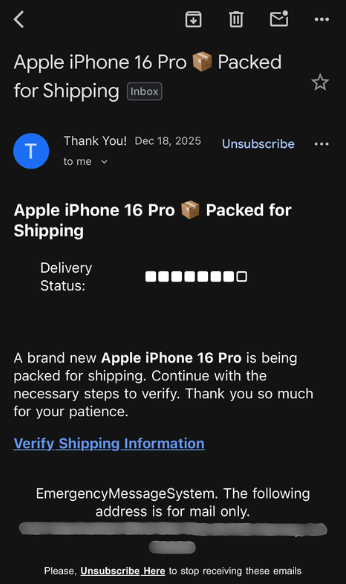
Fraudulent online stores are built to look indistinguishable from legitimate retailers, complete with product photos, customer reviews, and professional designs. The difference only becomes clear after payment, when nothing arrives.
In This Guide
- Overview of the Scam
- How the Scam Works
- Common Variations
- Example Scam Messages or Pop-Ups
- Warning Signs
- Who Scammers Often Target
- What the Scammer Is Trying to Achieve
- What To Do If You Encounter This Scam
- If You Already Paid or Shared Information
- How To Prevent Online Shopping Scams
- Final Safety Advice
Overview of the Scam
Online shopping scams occur when a fraudulent website or individual seller takes payment for products they never intend to deliver, or delivers something completely different from what was advertised. The sites are often professionally designed with realistic product images, fake customer reviews, and plausible-sounding business names - making them genuinely difficult to distinguish from legitimate retailers at a glance.
These scams have grown significantly as online shopping has become a normal part of everyday life. Scam stores frequently appear in paid social media advertisements targeting specific demographics, or rank in search engine results for popular products. They often use deeply discounted prices as a primary lure - offering brand-name items, electronics, or seasonal goods at prices well below what legitimate retailers charge.
The outcomes vary: some victims receive nothing at all, others receive a cheap counterfeit of what they ordered, and some receive something completely unrelated to their purchase. In all cases, the goal was the payment - and the product was never real.
How the Scam Works
Online shopping scams follow a predictable pattern from discovery to loss, even though the specific presentation varies.
- You encounter the fraudulent store through a social media ad, a search engine result, or a link shared online. The ad often promotes a deeply discounted or hard-to-find product - a popular brand item at 60% off, a limited-edition product that sold out elsewhere, or a trending item at an unusually low price.
- The store's website looks legitimate. It has product photos, a shopping cart, a returns policy, contact information, and sometimes customer reviews. The checkout process works normally, and you receive an order confirmation email.
- You pay using a credit or debit card, and the charge goes through without any immediate problem. The store may send a shipping confirmation with a tracking number - but the tracking number is either fake or belongs to a different package going to a different address.
- Weeks pass and nothing arrives. When you try to contact the store, emails bounce, the phone number does not work, or customer service responses are evasive and unhelpful. The store may still be online and taking new orders.
- In some cases a package does arrive - but it contains a cheap knockoff, a completely different product, or even a small worthless item such as a single piece of jewelry sent to create a fake tracking delivery confirmation.
Common Variations
Online shopping fraud takes several specific forms depending on the platform and product category.
- Fake standalone stores: A website is built specifically to appear as a legitimate retailer. These often use domain names that closely resemble real brand names or add words like "official," "store," or "deals" to a familiar name. The site runs for a period, collects payments, then disappears.
- Fraudulent marketplace sellers: A scammer creates a seller account on Amazon, eBay, Etsy, or a similar platform and lists products - sometimes at normal prices to appear trustworthy - before taking payments and either not shipping or shipping something worthless.
- Social media shop scams: Ads on Facebook, Instagram, or TikTok lead to fake stores selling trending items. These stores are often created quickly during holiday seasons or when a particular product is trending, to capture impulse purchases.
- Counterfeit goods stores: The store does ship a product, but it is a cheap counterfeit of the branded item advertised - fake designer clothing, non-functional electronics, or imitation health products that may not be safe.
- Classified ad and peer-to-peer scams: On platforms like Facebook Marketplace or Craigslist, a seller lists a high-demand item at a good price and asks for payment before shipping. The item does not exist and is never sent.
Example Scam Messages or Pop-Ups
The example below shows what a fraudulent online store ad and website often look like. At a glance they closely resemble legitimate retail experiences, which is why they are effective.
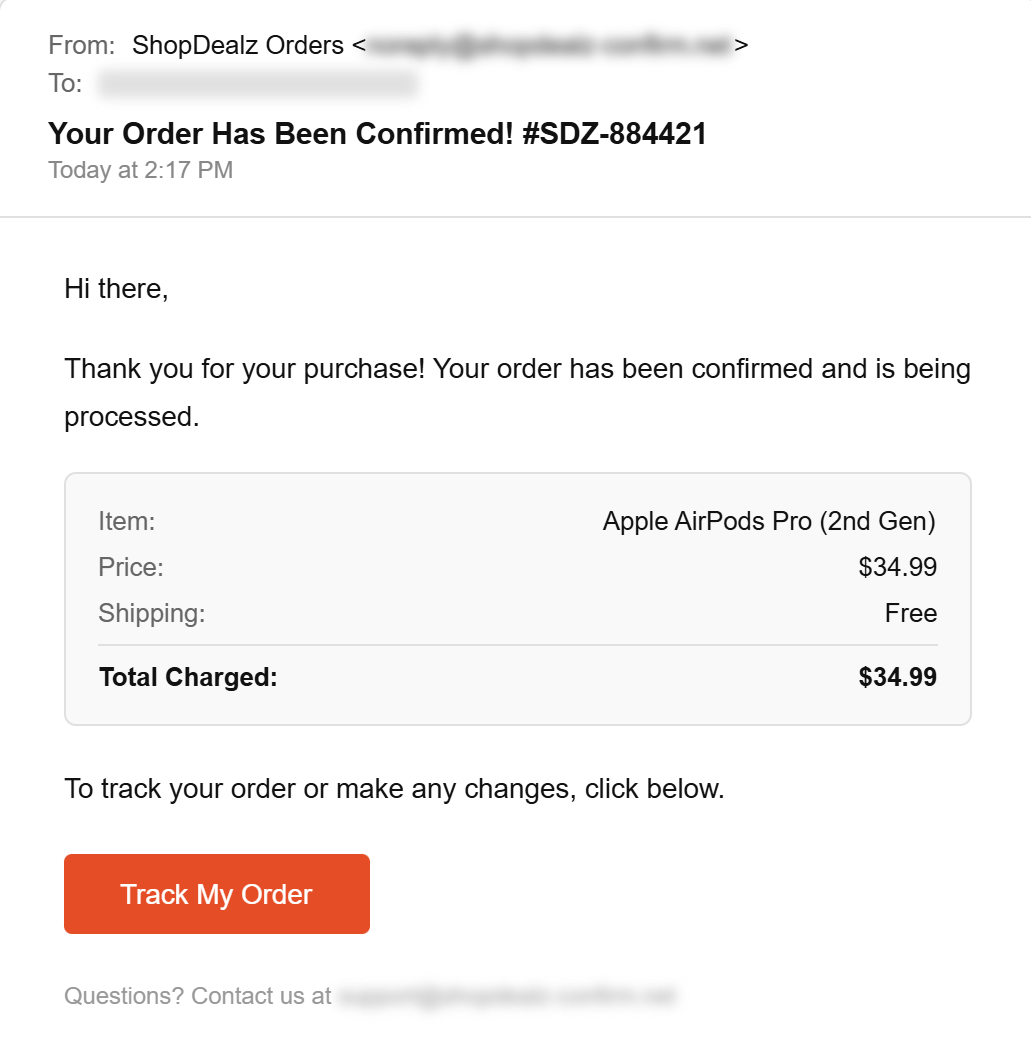
Notice the deeply discounted pricing, the professional but generic store design, and the lack of any verifiable contact information. Real customer reviews are specific, recent, and varied in tone. Fake reviews tend to be uniformly positive, vague, and often posted in clusters. Checking the domain age and searching the store name with the word "scam" or "review" before purchasing takes under a minute and can prevent significant financial loss.
Common features of scam store ads include: "Limited time - 70% off storewide," "Official [Brand Name] Clearance Sale - While Supplies Last," countdown timers showing a sale about to end, and product photos that appear to be taken from legitimate retailer listings. The stores typically have no verifiable physical address, use generic contact forms rather than a direct email, and have domain names registered very recently.
Warning Signs
These signals are common indicators that an online store or seller is not legitimate.
- Prices are dramatically lower than what any other retailer is charging for the same item. If a product that sells for $200 everywhere else is listed for $49, something is wrong.
- The store has no verifiable physical address, no working phone number, and only a contact form with no direct email. Legitimate retailers provide real contact information.
- The domain name is new - registered in the last few weeks or months - but the store claims to have been in business for years. You can check this with a WHOIS lookup.
- The website has no clear returns policy, or the policy is vague and hard to act on. Legitimate retailers have specific, actionable return processes.
- Reviews are uniformly five stars, vague in content ("great product, fast shipping"), and all posted around the same time rather than spread over months or years.
- The store is reached through a social media ad for a deeply discounted trending product. Many scam stores specifically run paid ads targeting people interested in popular items.
- Payment is accepted only through wire transfer, cryptocurrency, or a payment app that does not offer buyer protection. Legitimate retailers accept credit cards, which offer dispute rights.
- The checkout asks for more personal information than necessary - such as your Social Security number or a copy of your ID - under the guise of age verification or fraud prevention.
Who Scammers Often Target
Online shopping scams target anyone who shops online, but they are particularly effective against people who are searching for a good deal on a specific item and may be less focused on vetting the seller when the price is right. Holiday shopping periods see a significant spike in fraudulent store activity because purchase volume is high and buyers are often purchasing gifts on a time constraint.
Older adults who are newer to online shopping may be less familiar with the specific signals that differentiate a legitimate store from a fraudulent one. At the same time, younger adults who are comfortable shopping on social media are frequently targeted by scam store ads because they make purchasing decisions quickly and impulsively through platforms they use daily.
What the Scammer Is Trying to Achieve
The primary goal is payment for products that will never be delivered. Beyond the immediate financial theft, scam stores also collect payment card details, billing addresses, email addresses, and sometimes phone numbers - all of which have value for future fraud or for sale to other criminal operations.
Some fraudulent stores are deliberately short-lived: they run for a few weeks, collect as many orders as possible, then close before chargebacks and complaints accumulate. Others operate for longer, relying on slow shipping claims to delay complaints and create confusion about whether the order is simply delayed.
What To Do If You Encounter This Scam
If you have placed an order and believe the store may be fraudulent, here is how to proceed.
- Do not wait. If you have not yet been charged and you realize the store is likely fake, cancel the order immediately if you are able. If you have been charged, begin the dispute process right away.
- Contact your credit or debit card issuer to dispute the charge. Credit cards offer strong buyer protection for non-delivery situations - this is one of the most important reasons to use a credit card for online purchases. Debit card disputes are possible but sometimes more limited.
- Document everything - take screenshots of the product listing, the order confirmation, any communications with the seller, and the store's contact information (or lack of it). This documentation supports your dispute.
- Report the store to the FTC at ReportFraud.ftc.gov. If you found it through a social media ad, report the ad to the platform as well.
- If the store was a marketplace seller on Amazon, eBay, or a similar platform, report the seller through the platform's reporting system and contact the platform's customer support about your order.
How To Prevent Online Shopping Scams
These habits make fraudulent stores much easier to identify before you purchase.
- Search the store name with "review" or "scam" before purchasing from any unfamiliar retailer. This takes under a minute and quickly surfaces complaints if other buyers have been defrauded.
- Check when the domain was registered. A store claiming to have been in business for years with a domain registered last month is almost certainly fraudulent. Free WHOIS lookup tools make this easy.
- Be skeptical of prices that seem too good to be true. Legitimate retailers have margins to maintain - if a price is 60-70% below what every other retailer charges, it is likely a scam or a counterfeit.
- Always pay with a credit card when shopping at unfamiliar stores. Credit cards offer chargeback rights that give you a meaningful path to recovery if an order is never fulfilled.
- Look for real contact information - a physical address, a phone number, a specific email address - not just a contact form. Test it before purchasing if you are uncertain.
- Stick to well-established platforms and retailers when purchasing high-value or hard-to-find items. The protections offered by major marketplaces and established retailers are significantly stronger than those available from unknown stores.
Final Safety Advice
Online shopping scams are easy to fall for because the fraudulent stores genuinely look like real ones. The investment in a professional-looking website, realistic product photos, and fake reviews is low for scammers but creates a convincing facade that many buyers have no reason to question - especially when the price is attractive.
The habits that protect you are quick and low-effort: search the store name before purchasing, check when the domain was registered, look for real contact information, and pay with a credit card whenever possible. These steps take a few minutes and can prevent significant financial loss.
If you have already been affected, file a chargeback with your card issuer as quickly as possible and report the store to the FTC. Credit card chargebacks are one of the most effective tools consumers have in online shopping fraud - which is why using a credit card rather than a debit card or payment app makes such a meaningful difference in your ability to recover.