
Medicare & Medicaid Scam
How health coverage scams trick people into giving away personal details
Scammers pose as Medicare or Medicaid representatives to extract personal details, billing information, and identification numbers from people who believe they are speaking with their health coverage provider.
In This Guide
- Overview of the Scam
- How the Scam Works
- Common Variations
- Example Scam Messages or Pop-Ups
- Warning Signs
- Who Scammers Often Target
- What the Scammer Is Trying to Achieve
- What To Do If You Encounter This Scam
- If You Already Shared Information
- How To Prevent Medicare & Medicaid Scams
- Final Safety Advice
Overview of the Scam
A Medicare or Medicaid scam is a type of fraud in which someone pretends to be a representative of a government health coverage program and contacts you with an offer, a warning, or a request that requires you to share personal information. The approach may feel helpful on the surface - a new benefit, a free medical device, a card replacement - but the real purpose is to collect your Medicare number, Social Security number, or other identifying details that can be used to commit fraud.
Unlike some scams that lead with threats and urgency, Medicare and Medicaid scams often begin with something that sounds positive or routine. A caller might tell you that you qualify for a free knee brace or glucose monitor, that your new Medicare card is ready and just needs to be verified, or that updated insurance information is required to keep your coverage active. The tone is often friendly and patient rather than aggressive.
These scams cause real harm - your information can be used to bill Medicare for services never provided, and once your Medicare number is compromised the consequences can take considerable time to undo.
How the Scam Works
The encounter typically begins with an unsolicited contact - most often a phone call, but sometimes a text message, an email, or even an in-person approach at a public event or community center. The pattern, once started, tends to follow a consistent sequence.
- You receive a call from someone who introduces themselves as a Medicare or Medicaid representative, a health insurance advisor, or an agent from a related government program. The caller may sound knowledgeable and use official-sounding terminology to establish credibility.
- They present a reason for the call that sounds routine or even beneficial. Common openings include: your new Medicare card is ready to be issued and your information needs to be confirmed, you qualify for a free medical device or benefit under a new government program, or your coverage details need to be updated to avoid a lapse in benefits.
- As the conversation continues, they ask you to confirm or provide identifying information. This typically includes your Medicare number, your Social Security number, your date of birth, your address, and sometimes your banking details for a small processing fee or to set up direct benefit payments.
- In some cases, the scammer sends a physical representative to your home or sets up a booth at a community event, offering free health screenings in exchange for your Medicare card and personal details. The screening itself may be cursory or entirely fabricated.
- Once the information has been collected, it is used to bill Medicare or Medicaid for medical services, equipment, or prescriptions that were never actually provided, or to commit broader identity theft using the combination of your Medicare number and personal details.
- You may not realize anything has happened for a long time. The first indication is often an Explanation of Benefits statement listing procedures or equipment you never received, or a notice that your Medicare coverage has been altered or that claims have been filed on your behalf.
Medicare will never call you out of the blue to offer free equipment or ask you to confirm your number to receive a new card. If a caller is asking for your Medicare number, that is a clear signal to end the conversation.
Common Variations
Medicare and Medicaid scams take a number of different forms, each designed to make the request for personal information feel natural and justified.
- Free medical equipment offers: A caller says you qualify for a free knee brace, back support, CPAP machine, glucose monitor, or other device under Medicare. All they need is your Medicare number and personal details to process the order. The equipment is never sent, but your information is used to file fraudulent claims.
- New Medicare card replacement: You are told that Medicare is issuing updated cards and that your current card needs to be verified or replaced. The caller asks you to confirm your existing Medicare number, which is then used for billing fraud.
- Coverage verification calls: A caller claims your Medicare or Medicaid coverage is about to lapse or has been flagged, and that you must provide updated information immediately to keep your benefits active.
- Free health screenings: Scammers set up temporary booths at senior centers, pharmacies, or community events and offer free screenings for conditions like diabetes or heart disease. Participation requires handing over your Medicare card and signing forms that authorize billing for services never rendered.
- Prescription drug assistance: You are offered help enrolling in a drug discount program or a new prescription benefit, but the process requires your Medicare number and insurance details.
- Medicaid renewal impersonation: Callers pose as Medicaid caseworkers and claim your annual renewal is due, asking you to confirm your personal details over the phone to keep your coverage from being terminated.
Example Scam Messages or Pop-Ups
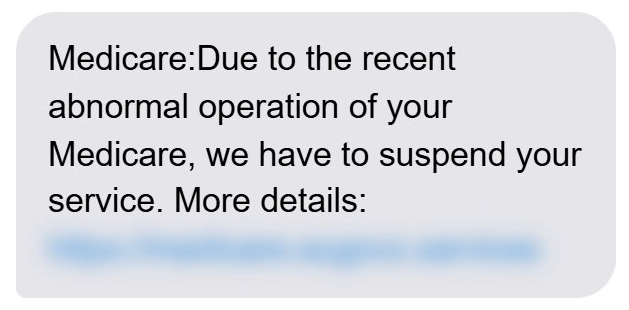
The screenshot below is a real example of the type of communication used in Medicare and Medicaid scams. These messages are designed to look and sound like they originate from a legitimate government health program. Recognizing the specific details that mark them as fraudulent can help you respond with confidence.
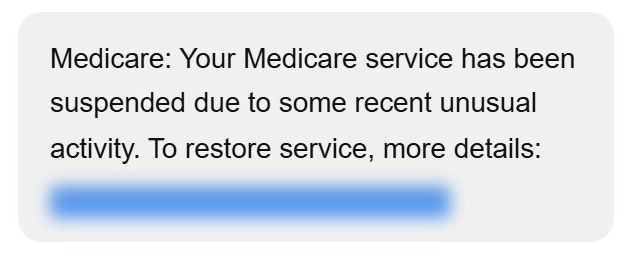
Notice the offer of a free device or benefit, the request to call back or confirm your Medicare number, and the reference to a government program or recent policy change. Medicare does not contact beneficiaries this way - legitimate communications from Medicare arrive by official mail and never ask you to share your Medicare number over the phone in response to an unsolicited contact.
Common phrases used in these scam messages include: you have been selected to receive a free benefit under the Medicare Advantage program, your Medicare card is expiring and must be replaced immediately, call this number to confirm your eligibility, a new law entitles you to free medical equipment, and we need to verify your information to process your updated benefits. These phrases are crafted to sound routine and helpful while prompting you to share sensitive details.
Warning Signs
The following signals are strong indicators that a contact claiming to be from Medicare, Medicaid, or a related health program is not genuine.
- You receive an unsolicited phone call, text, or email from someone claiming to represent Medicare or Medicaid, especially when you have not recently contacted the program yourself or requested any changes to your coverage.
- The caller offers you something for free - a medical device, a health kit, a benefit upgrade - in exchange for confirming your Medicare number or other personal details. Medicare does not work this way.
- You are told that your coverage is about to lapse, that your card is expiring, or that your information needs to be updated immediately to avoid losing your benefits. These claims are designed to create urgency and prevent you from verifying the situation independently.
- The caller asks for your Medicare number, Social Security number, date of birth, bank account details, or any combination of personal information over the phone.
- Someone approaches you at a community event, pharmacy, or public location and asks for your Medicare card in exchange for a free screening or health service.
- You receive an Explanation of Benefits from Medicare listing services, equipment, or procedures that you did not receive and do not recognize.
- The caller asks you to pay a small fee for processing, shipping, or enrollment using a gift card, wire transfer, or other non-standard payment method.
- The caller discourages you from verifying the call independently or asks you to keep the conversation confidential.
Who Scammers Often Target
Medicare and Medicaid scams are aimed almost exclusively at people who are enrolled in or eligible for these programs. Because Medicare primarily serves adults aged 65 and older, older adults bear the brunt of this type of fraud by a significant margin.
Scammers target older adults not only because they are the eligible population but also because they may be less likely to question a call that references their health coverage. For many people, any contact involving their medical benefits feels important and worth engaging with carefully rather than dismissing outright. Scammers exploit that instinct.
People managing chronic conditions are also frequently targeted. If someone already uses a CPAP machine, relies on insulin, or has a knee or back condition, an offer of free or upgraded equipment related to that condition is far more plausible - and therefore more convincing - than a generic outreach.
Medicaid recipients, who are often lower-income individuals and families, may be targeted with renewal scams or coverage verification calls that play on the fear of losing a health program they depend on. The threat of losing medical coverage can be enough to make someone hand over information they would otherwise protect carefully.
What the Scammer Is Trying to Achieve
The primary goal of Medicare and Medicaid scams is healthcare fraud - using your identifying information to bill government health programs for services, equipment, or prescriptions that were never actually provided to you. This type of fraud costs the healthcare system billions of dollars each year and can affect your own coverage if claims filed in your name reach program limits or trigger audits of your account.
Your Medicare number, combined with your date of birth and other personal details, is enough for a fraudster to submit claims on your behalf to Medicare or Medicaid indefinitely. Unlike a stolen credit card, which can be canceled, a Medicare number is tied to your identity and much harder to simply replace. The process of correcting fraudulent billing associated with your number can be lengthy and frustrating.
In cases where banking information is also collected, the scammer may pursue direct financial theft in addition to billing fraud. And as with other identity-based scams, the combination of personal details collected during a Medicare scam can be used across a range of other fraud types - credit accounts, tax returns, Social Security claims - long after the initial encounter.
What To Do If You Encounter This Scam
If you receive an unexpected call, text, or other contact involving your Medicare or Medicaid coverage, the following steps will help you handle it safely.
- Do not share your Medicare number, Social Security number, date of birth, or any other personal information with an unsolicited caller or in response to an unexpected message. Treat your Medicare number with the same care you would give a credit card number.
- Hang up if the call feels suspicious. You do not need to be polite to someone who may be attempting to defraud you, and ending the call causes no harm.
- Do not accept offers of free equipment or services in exchange for your Medicare number. Legitimate Medicare benefits do not work this way - if you are genuinely eligible for a device or service, your own doctor will coordinate it through proper channels.
- If someone approaches you at a public event and asks for your Medicare card as part of a screening or enrollment process, decline and walk away. You can report the location to Medicare afterward.
- Call Medicare directly at if you want to verify whether any communication you received was genuine. Use only the number from Medicare.gov, not any number provided to you in a suspicious contact.
- Report suspicious contacts to the Office of Inspector General at the Department of Health and Human Services at oig.hhs.gov, and to the Federal Trade Commission at ReportFraud.ftc.gov. Reports from the public help investigators identify and act against organized fraud operations.
How To Prevent Medicare & Medicaid Scams
The most effective protection is a clear understanding of how Medicare and Medicaid actually communicate and what they will never ask you to do.
- Guard your Medicare number as carefully as you would a bank account number or Social Security number. Do not share it with anyone who contacts you unexpectedly, and do not carry your Medicare card with you unless you are going to a medical appointment where it will be needed.
- Know that Medicare does not call beneficiaries to offer free equipment, confirm card numbers, or update personal information over the phone in response to unsolicited outreach. Any call making these requests is not from Medicare.
- Review your Explanation of Benefits statements every time you receive one. These documents list every claim filed under your Medicare number and are one of the most effective ways to catch fraudulent billing early.
- Be cautious at health fairs, community events, and public screenings where someone asks for your Medicare card. Legitimate community health services do not require your Medicare number simply to check your blood pressure or offer general health information.
- If you receive a call about your Medicare or Medicaid coverage that you are uncertain about, hang up and call the program directly using the number from the official government website. Never use a callback number provided by the person who contacted you.
- Talk with older family members and friends about these scams. Many people are unaware that their Medicare number is a target for fraud in the same way a credit card number is. Sharing that awareness makes a meaningful difference.
- Consider using a scam awareness service or phone number verification tool when you receive unexpected calls involving your health coverage, insurance, or government benefits.
Final Safety Advice
Medicare and Medicaid scams are particularly effective because they do not always feel like scams. A caller offering a free health benefit or helping you keep your coverage active sounds like someone looking out for you - not someone trying to defraud you. That is precisely what makes this type of approach so well-suited to deceiving people who are simply trying to take care of their health.
The clearest protection is knowing the rules that Medicare and Medicaid actually follow. These programs communicate through official mail. They do not call you out of the blue. They do not offer free equipment over the phone in exchange for your number. They do not need you to confirm your Medicare ID to process a new card. Anything that breaks those rules is worth being skeptical of, no matter how friendly or official the caller sounds.
Your Medicare number is one of the most valuable pieces of information a fraudster can obtain. It is connected to your identity, your medical history, and a federal health program that pays out claims in your name. Protecting it is worth a moment of caution even when a call seems routine.