
IRS Tax Scam
How fake tax threats pressure people into paying money or sharing personal information
Fraudsters impersonate the IRS to create fear around tax debt, audits, or legal action - pushing people to pay or share sensitive information before they have time to verify anything.
In This Guide
Overview of the Scam
An IRS tax scam is a type of fraud where someone poses as an IRS agent and contacts you with alarming news - unpaid taxes, a filing error, or a warrant for your arrest. The goal is to frighten you into paying immediately or handing over sensitive personal information.
These scams are designed to exploit the natural anxiety most people feel around tax time - and around any contact that appears to come from a government authority. The IRS carries real weight in everyday life, and scammers count on that. They use official-sounding language, fake case numbers, and manufactured urgency to make the situation seem both credible and critical.
IRS impersonation scams are among the most frequently reported fraud types in the country, appearing in large numbers especially between January and April during tax filing season. They cause significant financial harm and, in cases where personal data is stolen, can lead to problems that take months or years to fully resolve.
How the Scam Works
The encounter almost always begins without warning - a phone call, a voicemail, an email, or a text message that demands your immediate attention. The approach tends to follow a recognizable pattern once it begins.
- You receive a call or message from someone claiming to be an IRS agent or a representative from a related government office such as the Department of the Treasury or a tax enforcement division. The caller ID may display a Washington D.C. area code or even a real IRS phone number, which can be faked using widely available technology.
- The caller delivers alarming news: you owe a specific amount in back taxes, your tax return has been flagged for fraud, or a warrant has been issued in your name. They may cite a case number, reference your general location, or mention the current tax year to make the claim feel grounded and specific.
- They tell you that unless you act immediately, serious consequences will follow. Common threats include arrest by local law enforcement, deportation, license revocation, or the seizure of your bank accounts and property. The urgency is deliberate - it is designed to prevent you from pausing to check the facts.
- To resolve the issue, they instruct you to make an immediate payment. The preferred methods are gift cards, wire transfer, or cryptocurrency - all of which are extremely difficult to recover once sent. They may ask you to stay on the phone while you purchase the cards and read the numbers aloud.
- In some variations, they ask for personal or financial information to verify your identity or process a refund, which gives them everything they need to commit identity theft or access your accounts.
- If you resist or express doubt, the caller may transfer you to a supposed supervisor, law enforcement officer, or attorney - all of whom are part of the same operation - to add credibility and increase the pressure.
The IRS does not call people without prior written notice. It does not demand immediate payment by gift card, wire transfer, or cryptocurrency. And it does not threaten arrest over the phone. Any contact that does these things is not from the IRS.
Common Variations
IRS tax scams arrive through several different channels and take a few distinct forms depending on what the scammer is trying to extract.
- Phone call threats: The most common form. A caller claims to be an IRS agent and threatens arrest or legal action unless a tax debt is paid immediately through gift cards or wire transfer.
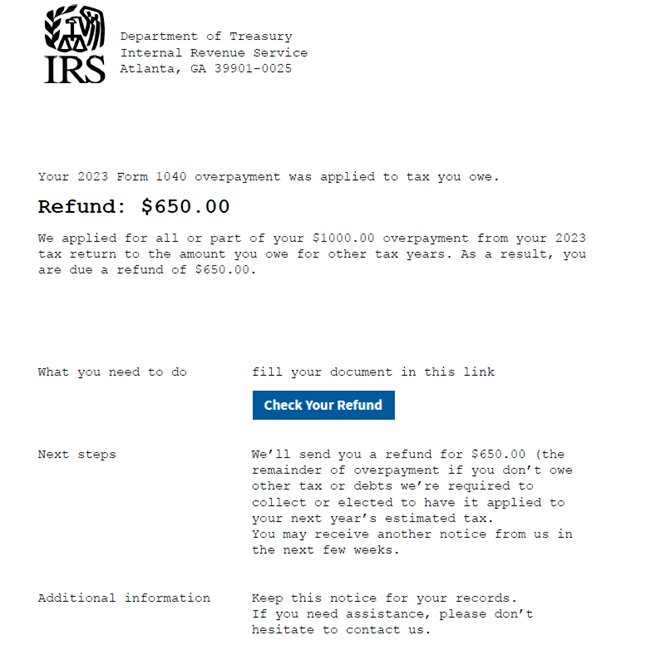
- Phishing emails: You receive an email appearing to come from the IRS, often with official-looking logos and formatting, asking you to click a link to verify your account, update your information, or download a tax-related document. The link leads to a fake website designed to harvest your login credentials or personal data.
- Text message alerts: A text arrives claiming your tax refund is on hold, your account has been flagged, or that you owe an immediate payment, with a link or callback number that connects to a scammer.
- Fake refund offers: Instead of threatening you, the scammer says you are owed a refund and needs your bank account details to deposit it. This is a straightforward attempt to obtain your financial information.
- Tax preparer fraud: Someone poses as a tax professional and offers to file your return, often promising a larger refund than expected. They collect your personal and financial information and either steal your identity, file a fraudulent return themselves, or charge inflated fees for work that was never done properly.
- Robocall voicemails: An automated recording leaves a message claiming to be from the IRS and instructs you to call back immediately or face legal consequences. The callback number connects to a real person who continues the scam.
Example Scam Messages or Pop-Ups
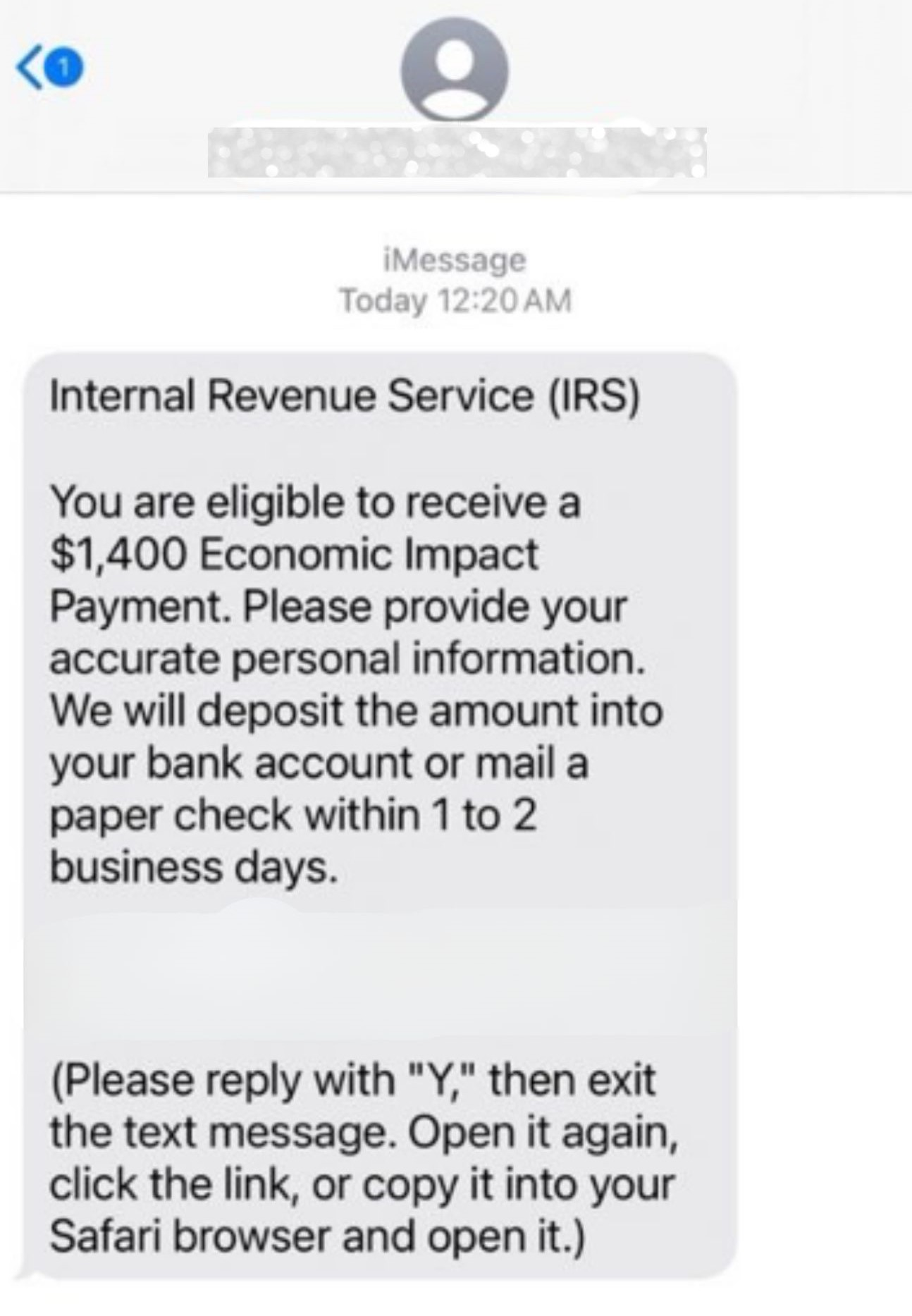
The screenshot below is a real example of the type of communication used in IRS tax scams. These messages are constructed to look and sound like they come from a legitimate government source. Understanding what to look for makes them much easier to identify before any harm is done.
Notice the official-sounding language, the specific dollar amount claimed as owed, and the threat of arrest or legal action. The message creates urgency and instructs you to call or act immediately. The real IRS communicates through official mail first and never demands payment by gift card, wire transfer, or cryptocurrency under any circumstances.
Common phrases that appear in these scam messages include: this is your final notice before legal action, a federal warrant has been issued in your name, your Social Security number has been suspended due to tax fraud, failure to respond will result in your immediate arrest, and press 1 to speak with an IRS officer. These phrases are chosen to create a sense of crisis and override careful thinking.
Warning Signs
The following signals are strong indicators that a contact claiming to be from the IRS is not what it appears to be.
- You receive an unexpected phone call, text, or email from someone claiming to be an IRS agent, especially if you have not recently filed a return or initiated contact with the IRS yourself.
- The caller demands immediate payment and threatens serious consequences - arrest, deportation, license suspension, or account seizure - if you do not comply right away.
- You are asked to pay using gift cards, wire transfer, cryptocurrency, or any other method that cannot be easily traced or reversed. The IRS accepts payment only through official channels such as IRS.gov or by check made out to the U.S. Treasury.
- The caller instructs you to keep the conversation confidential and not to tell your accountant, attorney, or family members about the situation.
- The caller ID displays a government phone number or a Washington D.C. area code. This does not confirm the call is legitimate - numbers can be spoofed to display anything.
- You are asked to stay on the line while you travel to a store to purchase gift cards, or while you complete a wire transfer at your bank.
- The email or text message asks you to click a link, download an attachment, or provide your Social Security number, bank account details, or login credentials.
- The communication threatens legal action, arrest, or deportation without any prior written notice from the IRS - which is how the real agency always initiates contact.
Who Scammers Often Target
IRS tax scams are cast broadly, but certain groups are approached more frequently or face a higher risk of being drawn in by the approach.
Older adults are disproportionately targeted. Many have fixed incomes and accumulated savings, and the threat of tax debt or a government lawsuit carries particular weight. Scammers also know that older adults may be less familiar with how the IRS actually communicates and may not think to verify a caller's identity before responding.
Recent immigrants and non-citizens are frequently targeted with versions of the scam that emphasize deportation. The threat of immigration consequences can be especially frightening, and scammers exploit that fear directly, often calling in the person's native language to add credibility.
Small business owners and self-employed individuals who handle their own taxes are also commonly targeted. Because they are more likely to owe taxes at filing time and may be less certain about whether their return was filed correctly, a claim of an error or an unpaid balance is easier to believe.
What the Scammer Is Trying to Achieve
The primary goal is money - collected as quickly and irreversibly as possible. Gift cards, wire transfers, and cryptocurrency are the preferred payment methods because they are extraordinarily difficult to trace or recover once the transaction is complete. By the time most people realize what has happened, the funds are gone.
When the scam targets personal information rather than immediate payment, the goal is identity theft. Your Social Security number, date of birth, tax filing details, and banking information together give a fraudster enough to file a return in your name and claim your refund, open new credit accounts, or access existing financial accounts. These downstream consequences can be far more damaging over time than the initial payment.
What To Do If You Encounter This Scam
If you receive an unexpected call, voicemail, email, or text claiming to be from the IRS and demanding action, the following steps will help you respond safely.
- Do not engage with the caller or respond to the message. If the contact is by phone, it is safe to hang up immediately. If it is a text or email, do not click any links, call any numbers provided, or reply.
- Do not send money through any channel in response to an unsolicited contact. The IRS will never demand payment by gift card, wire transfer, or cryptocurrency, under any circumstance.
- Do not share personal information. This includes your Social Security number, date of birth, tax filing details, bank account numbers, or any login credentials.
- If you are concerned there may be a genuine issue with your taxes, contact the IRS directly using the number from IRS.gov - not from any message you received. You can also log into your account at IRS.gov to check your balance and any official notices.
- Use a phone number lookup tool to check whether the number that contacted you has been reported in connection with scam activity before deciding on any next steps.
- Report the contact to the IRS - for emails, forward the message to phishing@irs.gov - or report phone calls to the Treasury Inspector General for Tax Administration at tigta.gov. Reporting helps track these operations and contributes to protecting others.
How To Prevent IRS Tax Scams
Prevention comes from knowing how the IRS actually operates and recognizing anything that falls outside that pattern.
- Know the IRS's real communication process. The agency always initiates contact through official mail sent to your address on file. A phone call about a tax debt without any prior letter is a reliable sign that the contact is not genuine.
- Understand that no legitimate government agency will ever ask for payment by gift card, wire transfer, or cryptocurrency. This applies to the IRS, the Treasury Department, the Social Security Administration, and every other official body - no exceptions.
- Create an online account at IRS.gov. This gives you direct visibility into your actual tax records, any balances owed, and any official notices issued in your name. If you ever receive a suspicious contact, you can log in and check your real status immediately.
- Be cautious with any email that appears to come from the IRS. The agency does not initiate contact by email for personal tax matters. If you receive such a message, do not click links or download attachments - forward it to phishing@irs.gov instead.
- File your tax return as early in the season as possible. Filing early reduces the window during which a scammer could file a fraudulent return in your name and claim your refund.
- Talk about these scams with people you care about, particularly family members who may be especially targeted. Familiarity with the pattern - the urgency, the gift card demand, the arrest threat - makes it far easier to recognize in the moment and simply hang up.
- Consider using a scam awareness service or phone number verification tool as part of your routine when you receive any unexpected contact involving government agencies or financial matters.
Final Safety Advice
Tax season brings a heightened awareness of money, deadlines, and government obligations - and scammers time their operations deliberately to take advantage of that. A call that arrives while you are already thinking about your return, or worrying about whether everything was filed correctly, is much harder to dismiss than one that arrives in July.
The most important thing to hold on to is this: the real IRS does not work the way these callers describe. It sends letters. It gives you time. It has an appeals process. It does not threaten you with immediate arrest, and it does not ask for gift cards. Any contact that skips the letter, skips the time, and demands immediate payment in an untraceable form is not from the IRS - regardless of what the caller ID shows or how official the voice on the line sounds.
You are always allowed to hang up and check. A few minutes spent calling the IRS directly, looking at your account at IRS.gov, or talking to someone you trust will either confirm that there is a real issue to address - in which case you can handle it through proper channels - or confirm that the call was a scam and you made the right choice by not engaging.
If you have been affected, report what happened and take steps to protect your accounts and identity. The experience is far more common than
Report
Block Member?
Please confirm you want to block this member.
You will no longer be able to:
- Mention this member in posts
Please allow a few minutes for this process to complete.