
Grandparent Scam
How scammers impersonate grandchildren in crisis to pressure older adults into sending money immediately
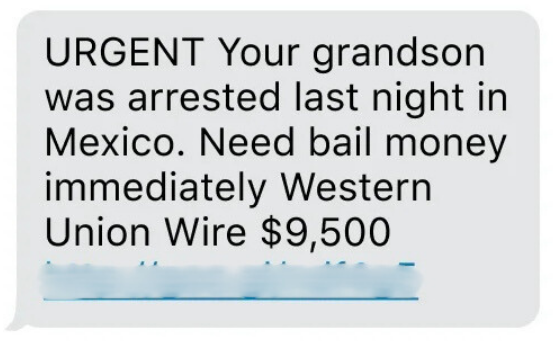
The grandparent scam works by exploiting the unconditional love a grandparent has for their family - creating a false emergency so urgent that victims feel they have no time to stop and verify.
In This Guide
- Overview of the Scam
- How the Scam Works
- Common Variations
- Example Scam Messages or Pop-Ups
- Warning Signs
- Who Scammers Often Target
- What the Scammer Is Trying to Achieve
- What To Do If You Encounter This Scam
- If You Already Paid or Shared Information
- How To Prevent Grandparent Scams
- Final Safety Advice
Overview of the Scam
The grandparent scam is a phone-based fraud in which a scammer calls an older adult pretending to be a grandchild - or someone calling on the grandchild's behalf - claiming the grandchild is in serious trouble and urgently needs money. The "trouble" is usually an arrest, a car accident, or a medical emergency in another city or country.
The scam is specifically designed to exploit the deep emotional bond between grandparents and grandchildren. Scammers rely on the fact that a grandparent who believes their grandchild is in danger will act quickly and emotionally rather than pausing to verify the story. The urgency is manufactured intentionally to prevent the victim from making even a simple phone call to check whether the emergency is real.
This scam has been reported for over two decades and remains highly effective today. It has evolved to take advantage of AI voice technology, social media, and other tools that make impersonation more convincing. Awareness of how it works is one of the most important protections a person can have.
How the Scam Works
The scam typically unfolds in a predictable sequence, though details vary. Here is how a common version plays out:
- You receive a phone call. The caller says something like "Grandma, it's me" or "Grandpa, I'm in trouble." They may not immediately give a name, waiting for you to guess - which gives them the name of an actual grandchild to use for the rest of the call.
- The caller claims to be in serious trouble - arrested after a car accident, stuck at a hospital abroad, or detained at an airport. They say they need money immediately and beg you not to tell anyone else in the family, often citing embarrassment or a legal restriction on discussing the case.
- A second person gets on the line - someone claiming to be a lawyer, a bail bondsman, or a police officer. This person sounds authoritative and explains exactly how much money is needed and how to send it.
- You are instructed to send money quickly by wire transfer, gift cards, or cash sent through a courier. Gift cards are especially common because they are immediate and nearly impossible to trace or recover.
- If you send money, the scammer may call back asking for more. Once they know you are willing to send, they will continue the story - claiming new fees, complications, or additional charges - until you become suspicious or run out of accessible funds.
Common Variations
While the classic grandparent scam involves a grandchild in trouble, scammers have adapted the approach in several ways.
- The lawyer or officer version: Instead of a grandchild calling first, the initial call comes from someone claiming to be an attorney or law enforcement officer saying your grandchild was in an accident and is currently unable to call themselves. This version skips the identity-guessing step and goes straight to the urgent request.
- AI voice cloning: Increasingly, scammers use short audio clips taken from social media to generate a synthetic voice that sounds like the actual grandchild. The cloned voice says a few lines to establish identity before handing off to the "lawyer" or "officer."
- The courier method: Rather than asking for a wire transfer or gift cards, the scammer sends a courier - an actual person - to your home to collect cash. This feels more legitimate but is just as fraudulent.
- Extended family variation: The caller claims to be a niece, nephew, or other family member rather than a grandchild. The structure of the scam is otherwise identical.
- Social media research version: Scammers use Facebook and other platforms to learn the names of your grandchildren, where they go to school, and recent activities - allowing them to open the call with convincing specific details that make the story harder to doubt.
Example Scam Messages or Pop-Ups
The grandparent scam is primarily conducted by phone, but the screenshot below shows the type of follow-up communication scammers sometimes send to reinforce the story and add urgency.
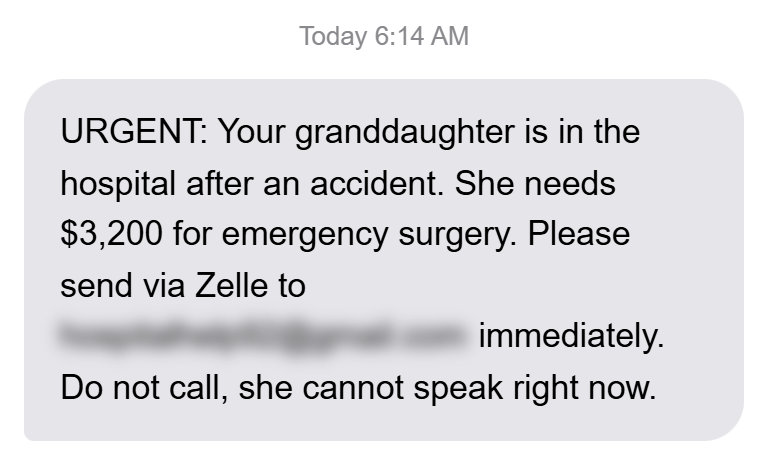
Notice the hallmarks: urgency, an instruction not to tell other family members, and a request for payment via gift card. The caller insists there is no time to verify the story. These are not the behaviors of a legitimate legal or medical situation - they are pressure tactics designed to prevent you from pausing long enough to recognize the fraud.
A typical call might sound like this: "Grandma, it's me - I was in a car accident and I got arrested. Please don't tell Mom and Dad, I'm so embarrassed. My lawyer says I need $3,000 for bail tonight or I'll have to stay in jail. Can you go to the store and get some gift cards and call me back with the numbers? Please hurry."
Warning Signs
These signals should immediately raise your suspicion during or after a call like this.
- The caller does not immediately identify themselves by name, instead saying something vague like "Grandma, it's me" and waiting for you to guess who is calling.
- The story involves an emergency that happened suddenly - a car accident, an arrest, a medical crisis - and requires money immediately, with no time to think or verify.
- The caller explicitly asks you not to tell anyone else in the family, citing embarrassment, legal restrictions, or fear of getting in trouble.
- Payment is requested via gift cards, wire transfer, cryptocurrency, or cash sent with a courier. None of these are how bail, legal fees, or hospital bills are legitimately paid.
- The voice does not quite sound right, or the person says they sound different because they were injured, are upset, or have a bad connection.
- A second caller - a "lawyer" or "officer" - joins the call with authoritative-sounding instructions about exactly how much to send and where.
- The caller discourages you from calling the grandchild back on their regular number, or explains why that number will not work right now.
- The urgency keeps escalating - if you hesitate or say you need time, the pressure increases rather than decreasing.
Who Scammers Often Target
This scam is specifically designed to target older adults, particularly those who have grandchildren and are active enough on social media or in their communities that scammers can gather basic information about their families.
Grandparents who have close, loving relationships with their grandchildren are especially vulnerable - not because they are naive, but because the emotional pull of believing a grandchild is in danger is extraordinarily powerful. The scam is engineered to trigger protective instincts that override analytical thinking.
People who live alone are also more frequently targeted because there is no one in the household to talk to before acting. The isolation makes it easier for the scammer to be the only voice the victim hears during the crucial moments when the decision to send money is being made.
What the Scammer Is Trying to Achieve
The immediate goal is cash - typically anywhere from $1,000 to $10,000 or more, sent as quickly as possible through a method that cannot be reversed. Gift cards are the preferred payment method because the scammer can get the card numbers over the phone and drain them immediately, leaving no way to recover the funds.
Beyond the initial payment, the scammer often continues the story to extract additional money - claiming new legal fees, additional bail conditions, or medical expenses. Some victims have lost tens of thousands of dollars across multiple calls before realizing the situation was fabricated.
What To Do If You Encounter This Scam
If you receive a call that follows this pattern, here is the most effective way to respond.
- Stay calm. The urgency you are feeling is intentional - the scammer needs you to act before you think. Taking even 60 seconds to pause is in your best interest.
- Ask the caller a specific question that only your real grandchild would know - the name of a pet, the school they attend, a recent family event. If they hesitate or give a vague answer, that is a strong signal the caller is not who they claim to be.
- Hang up and call your grandchild directly on the number you already have for them. Do not use any number the caller provides. If your grandchild answers and is fine, the earlier call was a scam.
- If you cannot reach your grandchild directly, call another family member - a parent, sibling, or aunt or uncle - to verify whether there is a real emergency before doing anything else.
- Do not send money, purchase gift cards, or allow a courier to come to your home until the situation has been independently verified through family contacts.
- If the call was a scam, report it to the FTC at ReportFraud.ftc.gov and to your local police department. This helps authorities track patterns and can protect others.
How To Prevent Grandparent Scams
A few simple habits and conversations with family can make this scam nearly impossible to succeed against you.
- Establish a family code word. Agree with your grandchildren that in a real emergency, they or someone calling on their behalf will use a specific word or phrase that only your family knows. If a caller cannot provide the code word, it is not a real emergency.
- Never guess a caller's identity for them. If someone calls and does not immediately say who they are, ask directly: "Who is this?" before providing any name or emotional response.
- Always verify before you pay. No real legal or medical emergency requires you to send money within the next hour without being able to verify with anyone else. That time pressure is a manipulation tactic.
- Review your social media privacy settings. The more public information scammers can find about your family, the more convincing their story can be. Limiting what is publicly visible reduces their ability to personalize the pitch.
- Talk to your grandchildren about this scam. Ask them to let you know in advance if they are traveling, which can help you assess whether an emergency story is plausible. And let them know that you will always call them back directly before sending money to anyone claiming to be them.
- Never send gift cards, wire transfers, or cash to resolve a family emergency without first speaking to a family member who can confirm the situation is real.
Final Safety Advice
The grandparent scam works because it targets something real and powerful: the love you have for the people who matter most to you. There is nothing naive about wanting to help your grandchild in a crisis. That is exactly what makes this scam so effective and so cruel.
The most important thing to remember is that a single phone call to your grandchild's known number - before sending any money - is all it takes to stop this scam completely. Real emergencies can withstand a two-minute verification. Scams cannot.
If you receive a call like this, slow down. The urgency is artificial. Ask a question only your real grandchild would know. Call them back. Call another family member. No legitimate emergency will fall apart because you took a moment to verify.
If you have already been affected, please do not carry this alone. Report it, tell your family, and reach out for support. This scam has targeted many people who are thoughtful, loving, and careful. Reporting it helps protect others in your community.