Government Benefit Scam
How scammers impersonate Social Security, Medicare, and other government agencies to steal your benefits, your identity, and your money
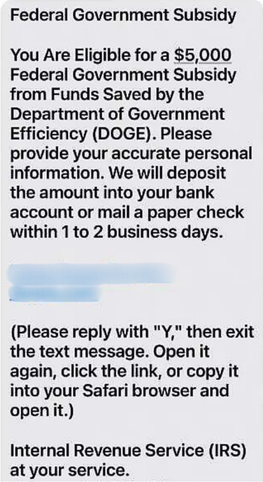
Government benefit scams use official-looking letters, calls, and messages to impersonate agencies that many people depend on - creating urgency around benefits, account suspensions, or new programs that require immediate action.
In This Guide
- Overview of the Scam
- How the Scam Works
- Common Variations
- Example Scam Messages or Pop-Ups
- Warning Signs
- Who Scammers Often Target
- What the Scammer Is Trying to Achieve
- What To Do If You Encounter This Scam
- If You Already Paid or Shared Information
- How To Prevent Government Benefit Scams
- Final Safety Advice
Overview of the Scam
Government benefit scams involve fraudsters impersonating agencies such as the Social Security Administration, Medicare, the Department of Veterans Affairs, or other federal and state programs. They contact victims by phone, mail, email, or text claiming there is a problem with their benefits, a new program they qualify for, or an urgent action required to protect their account - and use this pretext to steal personal information, Social Security numbers, or money.
These scams are particularly alarming for older adults who depend on Social Security or Medicare for their financial security and healthcare. The threat of losing or interrupting these benefits creates immediate fear that overrides careful thinking - which is exactly the response scammers are engineering.
Real government agencies communicate in specific, well-defined ways. Understanding how they actually reach out - and how they do not - is one of the clearest protections against this type of fraud.
How the Scam Works
Government benefit scams use authority and urgency to create a sense that immediate action is required.
- You receive a call, letter, email, or text appearing to come from a government agency. The communication uses official-sounding language, references real program names, and may include a case number or official-looking seal.
- The message describes a problem requiring your immediate attention - your Social Security number has been suspended, your Medicare benefits are about to be canceled, you owe a balance that must be paid to avoid losing coverage, or a new benefit program requires you to verify your information to claim it.
- You are asked to call a number, click a link, or respond with personal information - your Social Security number, Medicare ID number, bank account details, or date of birth - to resolve the issue or claim the benefit.
- If you provide the information, it is used for identity theft - opening new accounts in your name, filing false tax returns, or redirecting your actual benefit payments to accounts controlled by the scammer.
- In versions involving payment, you are told to send money via gift cards, wire transfer, or prepaid card to settle a penalty, pay a processing fee, or avoid suspension of your benefits. The payment is taken and the threat continues or escalates.
Common Variations
Government benefit scams impersonate several different agencies and use a range of scenarios.
- Social Security suspension scam: A call claims your Social Security number has been "suspended" due to suspicious activity or involvement in a crime. You must verify your identity or pay a fee to restore it. Social Security numbers cannot be suspended.
- Medicare card scam: A caller says your Medicare card is being updated and you need to verify your information or pay a processing fee to receive your new card. Medicare does not charge for card updates and does not call to collect personal information.
- New benefit program scam: A letter or call claims you qualify for a new government benefit - extra Medicare coverage, a stimulus payment, or an enhanced Social Security benefit - and must provide personal information or pay a fee to enroll or claim it.
- Benefit overpayment scam: A call claims you have been overpaid benefits and must repay the amount immediately or face suspension of future payments. Real overpayment notices come by mail with a defined repayment process.
- VA benefit scam: Veterans are targeted with calls claiming their VA benefits are at risk or that a new program requires immediate enrollment. The VA does not call veterans to demand personal information or payment to access benefits.
Example Scam Messages or Pop-Ups
The example below shows the type of communication used in government benefit scams. The official language and government agency references are specifically designed to create compliance.
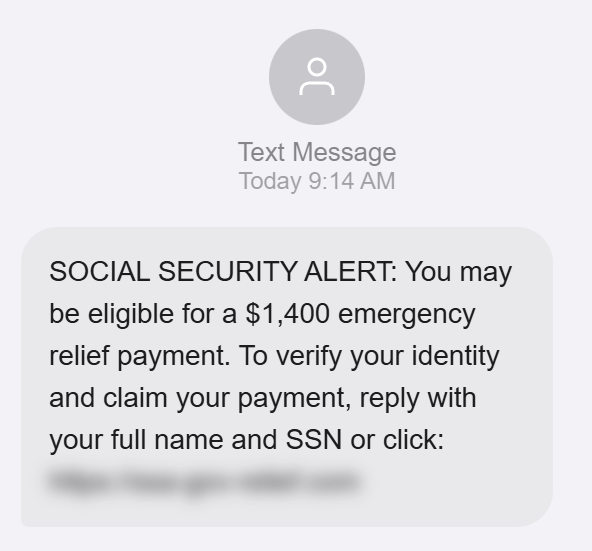
The communication uses agency names, official-sounding terminology, and urgent language about benefit suspension or legal consequences. Real agency letters include specific contact information that can be independently verified, do not demand immediate phone responses, and do not threaten arrest or immediate suspension without a formal written notice process. Any communication that cannot be verified through the agency's published contact information should be treated with extreme caution.
Typical language includes: "Your Social Security number has been suspended due to suspicious activity. Call immediately to prevent arrest and legal action," "Your Medicare benefits will be canceled in 24 hours unless you call to verify your account information," and "You have been selected to receive an additional $1,400 Medicare benefit. Call now to claim it before the deadline."
Warning Signs
These signals consistently indicate a government benefit communication is fraudulent rather than legitimate.
- The contact came by phone, text, or email for a matter that real agencies handle primarily by mail. Significant benefit changes, account issues, and overpayment notices arrive in writing.
- The message threatens immediate consequences - arrest, benefit suspension, legal action - that will occur within hours unless you act now. Real agencies provide formal written notice and defined response periods.
- You are asked to verify your Social Security number, Medicare ID, or bank account details over a call you did not initiate. Real agencies do not request these details by inbound phone call.
- Payment is requested via gift cards, wire transfer, or prepaid cards to resolve a penalty or restore benefits. Government agencies do not accept these payment methods.
- The caller claims your Social Security number has been "suspended" or "compromised." This is not something that can happen to a Social Security number.
- A new benefit program requires a processing fee or personal information submission to claim. Legitimate government benefits do not require upfront payment to access.
- The phone number does not match the agency's published contact information, or the letter's return address cannot be verified against the agency's official website.
Who Scammers Often Target
Government benefit scams disproportionately target older adults who receive Social Security or Medicare because these are the people for whom the threat of losing these benefits is most frightening and most immediate. The prospect of losing healthcare coverage or monthly income creates a level of fear that is difficult to manage calmly.
Veterans are specifically targeted by VA benefit scams because VA benefit programs are complex, many veterans are unaware of the full scope of their entitlements, and the authority of military and government language resonates particularly strongly.
Anyone who has recently applied for a government benefit program - or who has been discussing doing so - may be targeted with fake "approval" or "enrollment" notifications that appear to be a response to their actual inquiry.
What the Scammer Is Trying to Achieve
The primary goal is your Social Security number. With this, a scammer can open new credit accounts in your name, file fraudulent tax returns to claim your refund, redirect your actual Social Security payments, or sell your identity on criminal markets. The Social Security number is the key that unlocks nearly every form of identity fraud.
In payment-focused versions of the scam, the goal is immediate money via untraceable methods. These versions tend to produce smaller individual losses but affect large numbers of people because the calls are made at high volume.
What To Do If You Encounter This Scam
If you receive a call, letter, or message claiming to be from a government agency about your benefits, here is the safest approach.
- Do not provide any information or make any payment during the contact. Hang up if it is a call, and do not click any link in a text or email.
- Find the agency's real phone number on their official government website - ssa.gov for Social Security, medicare.gov for Medicare, va.gov for Veterans Affairs - and call them directly to ask whether there is any actual issue with your account.
- In almost every case you will confirm that your account is in good standing and that no contact was initiated. This confirms the earlier communication was fraudulent.
- Report the contact to the FTC at ReportFraud.ftc.gov and to the agency being impersonated.
- If the contact arrived by mail, report it to the US Postal Inspection Service as well.
How To Prevent Government Benefit Scams
Knowing how real agencies communicate is your most reliable protection against these scams.
- Remember that Social Security, Medicare, and the VA communicate significant matters primarily by mail. An unexpected phone call about your benefits is almost always a scam.
- Never provide your Social Security number, Medicare ID, or bank account details in response to a call you did not initiate, regardless of what agency the caller claims to represent.
- If you receive any concerning contact about government benefits, call the agency directly using the number from their official website before responding to or acting on the contact.
- Set up a my Social Security account at ssa.gov to monitor your Social Security record and benefit status directly. This gives you an independent way to verify whether any issue described in a suspicious communication actually exists.
- Share this knowledge with older family members who receive Social Security or Medicare. A brief conversation about how these agencies actually communicate can prevent significant harm.
Final Safety Advice
Government benefit scams are effective because they target the things people depend on most - their income, their healthcare, their financial security. The fear of losing these is real and entirely reasonable. What is manufactured is the urgency and the threat itself.
The protection is straightforward: hang up, find the real number, and call the agency yourself. This single step will resolve almost every situation correctly - either confirming there is no real issue, or connecting you with genuine agency staff who can help if something is actually wrong. Real problems do not disappear when you take five minutes to verify them. Scams do.
If you have shared your Social Security number or other sensitive information, act quickly to place a credit freeze and report the incident. The sooner protective measures are in place, the less damage can be done with the information that was taken.