Charity Scam
How fake charities and fraudulent donation requests exploit your generosity - especially after disasters and emergencies
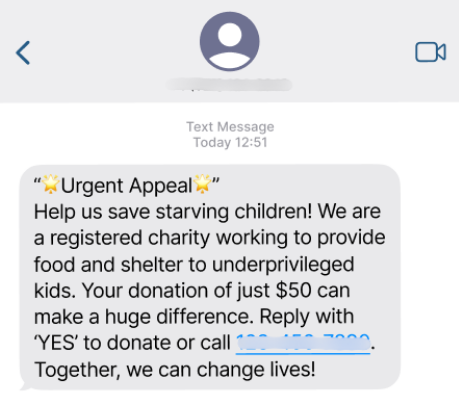
Charity scams spike immediately after disasters, emergencies, and viral news events - when the impulse to help is strongest and the time to research feels shortest. Fraudulent organizations are often set up within hours of major events to capture donations meant for real victims.
In This Guide
Overview of the Scam
Charity scams involve fraudulent organizations or individuals soliciting donations that never reach the people or causes they claim to support. These operations range from completely fabricated charities with no real activity to organizations that exist on paper but direct the vast majority of donations to their operators rather than to any charitable purpose.
These scams are most active in the immediate aftermath of natural disasters, disease outbreaks, military conflicts, or other high-profile emergencies when public generosity is at its peak. Fraudulent charities can be established within hours of a major event, complete with websites, donation pages, and social media accounts, designed to intercept donations intended for legitimate relief efforts.
Charity fraud is particularly painful because it not only harms the donor but also diverts resources from genuine relief organizations and the people who actually need help. Knowing how to verify a charity before donating ensures that your generosity goes where you intend it to go.
How the Scam Works
Charity scams operate through several channels and use a consistent set of tactics to generate donations.
- A fraudulent charity is established - sometimes with a name very similar to a well-known legitimate organization, sometimes as an entirely new entity created to respond to a specific event. A website, social media accounts, and a donation portal are set up quickly to appear operational and credible.
- The charity is promoted through social media posts, email campaigns, phone calls, or door-to-door solicitation. During disaster situations, fraudulent charities often run paid social media ads that appear alongside or even above legitimate organizations in search results and feeds.
- Emotional appeals are used - photos, videos, and stories designed to create an immediate connection to the cause and a sense that donating now will have an immediate impact. Urgency is emphasized: the need is critical, the situation is evolving, and immediate donations are essential.
- Donations are collected through the charity's website, a payment link sent by email or text, or in cash during door-to-door or phone solicitations. The money goes directly to the scammer rather than to any charitable purpose.
- After collecting donations, the organization either disappears entirely or continues operating in a minimal way - with no meaningful charitable activity - while directing funds to its operators.
Common Variations
Charity scams take several distinct forms depending on the cause they claim to represent and how they solicit donations.
- Disaster relief scams: Fake organizations claiming to collect donations for hurricane, earthquake, flood, or wildfire victims. These appear within hours of major disasters and are promoted aggressively through social media and email.
- Name confusion charities: Organizations with names nearly identical to well-known charities - "American Cancer Society Fund" instead of "American Cancer Society," or "Red Cross Relief" instead of "The American Red Cross" - designed to capture donations from people who think they are giving to the real organization.
- Veteran and first responder fraud: Charities claiming to support military veterans, police officers, or firefighters. These are among the most common charity scam categories and some of the hardest to distinguish because there are many legitimate charities in these spaces as well.
- Phone solicitation scams: Callers claiming to represent a charity ask for a credit card donation over the phone. In some cases the charity barely exists; in others, the caller is a paid solicitor keeping 85-90% of every donation as their fee, with only a small fraction reaching any actual cause.
- Social media crowdfunding fraud: A post on social media - often accompanied by emotional photos or videos - asks people to donate directly to an individual or a payment link claiming to support a specific family or cause. The money goes to the post creator, not to the stated beneficiary.
Example Scam Messages or Pop-Ups
The example below shows the type of social media post or email appeal used by fraudulent charities. These communications are designed to create an immediate emotional response and a sense that donating quickly is the right thing to do.
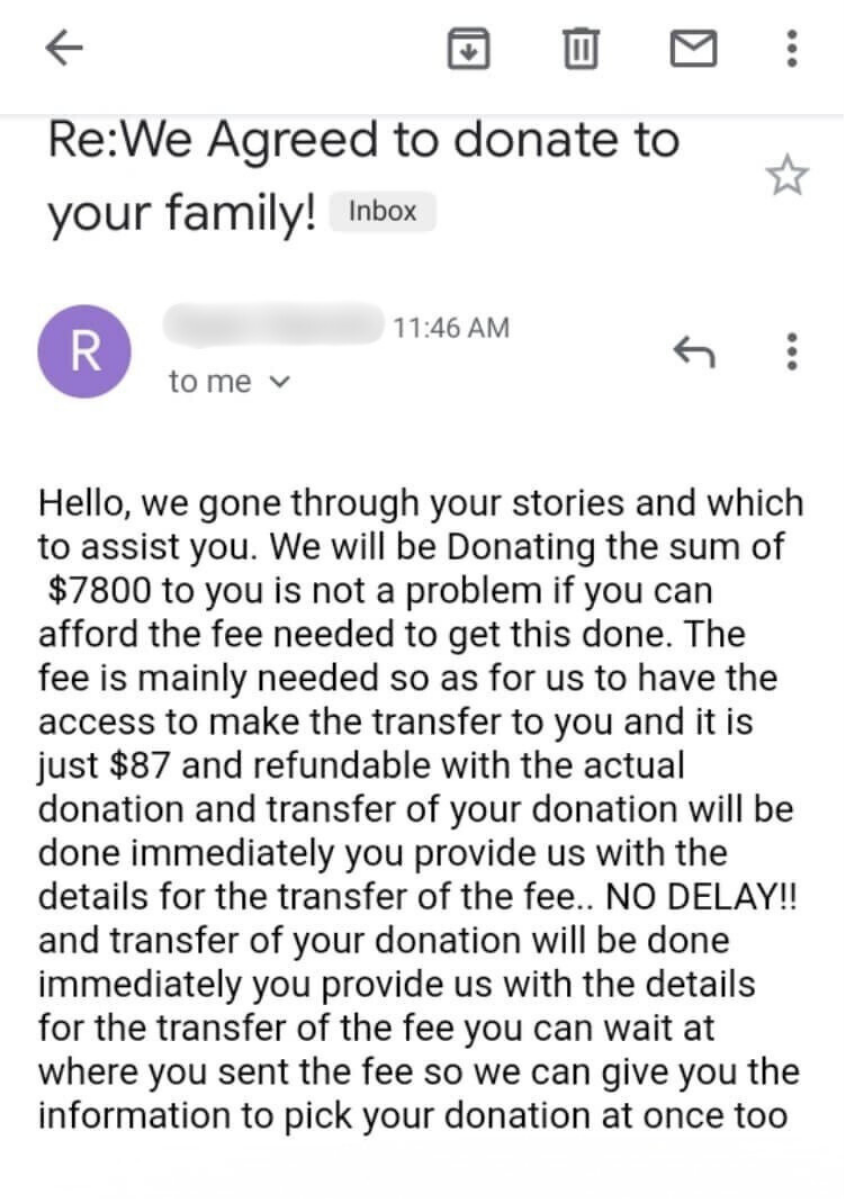
Notice the urgent language, the emotional imagery, and the absence of specific information about how donations are used or what percentage reaches the beneficiaries. Legitimate charities are transparent about their programs, their financials, and how donor money is allocated. A charity that cannot or will not answer these questions directly is a red flag - regardless of how compelling the cause appears.
Common language in charity scam appeals includes: "Thousands of families have lost everything - donate now and 100% of your gift goes directly to victims," "Our volunteers are on the ground right now - every dollar counts and cannot wait," "Help us reach our goal before midnight tonight - these children are counting on you," and links to donation pages that process payments but have no connection to any actual relief activity.
Warning Signs
These signals indicate that a charitable solicitation may be fraudulent or at least worth careful scrutiny before donating.
- The charity appeared very recently - within days of a disaster or news event - and has no track record, no rating on charity evaluation sites, and no established history of program activity.
- The name closely resembles a well-known charity but is slightly different. The visual branding and messaging may also be designed to resemble the real organization.
- The appeal creates extreme urgency - donate in the next hour, before midnight tonight, or the opportunity to help will be gone. Legitimate charities do ongoing work and do not typically operate with one-hour donation windows.
- The charity cannot be found on Charity Navigator, GuideStar, or the BBB's Give.org - or appears on these sites with a low rating, unresolved complaints, or a high percentage of funds going to administrative costs.
- Donation is requested via wire transfer, gift card, cryptocurrency, or cash. Legitimate charities accept credit cards and checks - methods that provide a receipt and a record of your donation.
- A phone solicitor cannot tell you specifically what programs your donation will fund or what percentage of donations reaches beneficiaries versus administrative and fundraising costs.
- The charity's website was registered very recently and contains little specific information about its programs, leadership, or how funds are used.
- The appeal uses graphic or emotionally manipulative images without identifying who is pictured or verifying that the images are related to the cause being promoted.
Who Scammers Often Target
Charity scams target people with a demonstrated willingness to give - which includes a significant portion of the adult population. People who have given to charities before, who are religiously active, or who have personal connections to a cause being promoted are particularly likely to receive solicitations.
Older adults are disproportionately targeted by phone-based charity solicitations. They are more likely to answer calls from unknown numbers and may be more willing to engage with a caller who seems to represent a worthy cause. They are also more likely to have donated to charities before, which means their names appear on donor lists that are sometimes sold or misused.
People who are emotionally engaged with a recent disaster or news event - because they have personal connections to the affected area or have been following coverage closely - are more vulnerable to the urgency of appeals tied to that specific situation.
What the Scammer Is Trying to Achieve
The goal is the donation itself - money given freely and with no expectation of return. Because donors believe the money is going to help someone in need, they are not watching for signs of fraud the way they might with a purchase or financial transaction.
Some charity fraud operations also collect payment card information, mailing addresses, and other personal data from donors - which can be used for additional fraud independent of the charitable donation itself. And donors whose names appear on lists associated with charitable giving may find themselves targeted by additional fraudulent solicitations in the future.
What To Do If You Encounter This Scam
If you receive a charity solicitation that you are uncertain about, these steps will help you give safely or identify fraud.
- Search the charity's exact name at Charity Navigator (charitynavigator.org) or GuideStar (candid.org) before donating. Legitimate registered charities appear in these databases with ratings, financial information, and program descriptions.
- If the charity cannot be found or was recently registered, donate instead to an established, highly-rated organization addressing the same cause. After a hurricane, for example, the American Red Cross, Direct Relief, or Team Rubicon are verified and accountable organizations with established relief infrastructure.
- If you receive a phone solicitation, ask the caller for the charity's full name, registration number, and website, and tell them you will research before donating. A legitimate solicitor will provide this information willingly. Pressure to donate right now without time to verify is a red flag.
- Report suspected charity fraud to the FTC at ReportFraud.ftc.gov and to your state attorney general's office. Most states have a charitable registration database where you can also verify whether a charity is legally registered to solicit in your state.
How To Prevent Charity Scams
These habits ensure that your charitable giving reaches the causes and people you intend to support.
- Verify before you give. A one-minute search on Charity Navigator or GuideStar tells you whether a charity is registered, how it spends donations, and whether it has any complaints or concerns associated with it.
- Give to established organizations with a track record. After any major disaster, the most effective approach is to support organizations that already have infrastructure and operations in the affected area - not newly created entities with no history.
- Be especially cautious about social media donation appeals. Posts asking you to donate through a payment link directly to an individual or a newly created page are particularly difficult to verify and frequently fraudulent.
- Never donate in cash or via gift card in response to a solicitation. Legitimate charities accept credit cards and checks, which provide a receipt and a record of your donation.
- Do not let urgency pressure you into donating without verification. The cause will still exist tomorrow. A charity that cannot wait for you to spend five minutes verifying its legitimacy is not a charity worth supporting.
- If you give regularly to specific causes, consider establishing relationships with charities you have already verified and continue giving to them directly rather than responding to new solicitations each time a relevant event occurs.
Final Safety Advice
Charity scams exploit one of the best things about people - the impulse to help when others are suffering. That impulse is worth protecting, not suppressing. The goal is not to make you less generous but to make sure your generosity actually reaches the people who need it.
The verification habit - checking Charity Navigator or GuideStar before any new donation - takes less than two minutes and reliably separates legitimate organizations from fraudulent ones. It is the most powerful thing you can do to protect both your money and your intention to help.
If you are moved to respond to a disaster or emergency and want to give immediately, the safest approach is to go directly to an organization you already know and trust - the American Red Cross, a local food bank, a verified relief organization with an established presence. Your donation will be more effective with an organization that already has the logistics in place to use it well.
If you have donated to what turned out to be a fraudulent charity, please report it. Your report helps authorities identify these operations, and it may help protect others from being defrauded in the same way by the same organization.