
Check Washing Scam
How thieves steal checks from the mail and chemically alter them - changing the payee and amount to drain your account without your knowledge
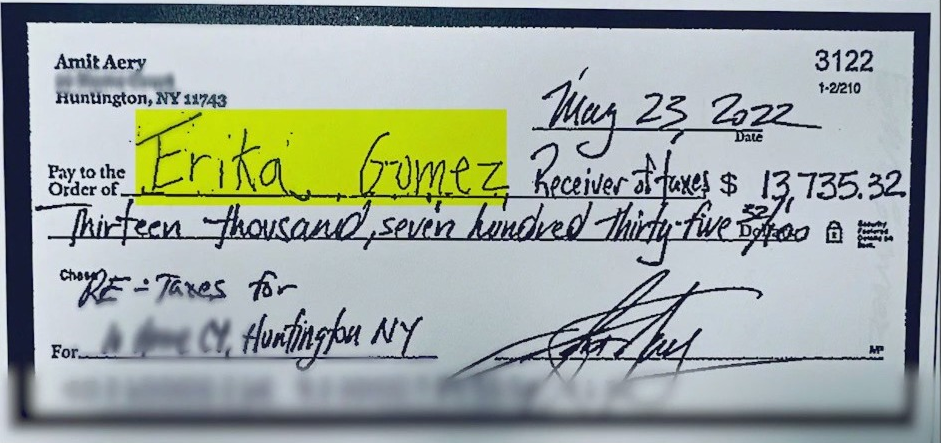
Check washing uses common household chemicals to erase pen ink from a stolen check, allowing thieves to rewrite any amount to any payee - while your original signature remains intact and the check clears as legitimate.
In This Guide
- Overview of the Scam
- How the Scam Works
- Common Variations
- Example Scam Messages or Pop-Ups
- Warning Signs
- Who Scammers Often Target
- What the Scammer Is Trying to Achieve
- What To Do If You Encounter This Scam
- If You Already Paid or Shared Information
- How To Prevent Check Washing Scams
- Final Safety Advice
Overview of the Scam
Check washing is a form of mail theft fraud in which a criminal steals a check from your mailbox or mail collection box, uses common chemicals - acetone, bleach, or commercial solvents - to erase the pen ink used to fill in the payee name and dollar amount, and rewrites the check to a different payee for a much larger amount. Your original signature remains on the check because it is typically applied with a different ink formulation that resists the washing chemicals. The altered check then clears your bank as if it were legitimate.
Check washing has increased significantly in recent years, driven by organized mail theft rings that target USPS collection boxes, letter carriers, and residential mailboxes. The rise of large check amounts in everyday transactions - rent payments, tax payments, contractor payments - means the potential loss from a single washed check has grown substantially.
Unlike many scams that require the victim to take an action, check washing is entirely passive from the victim's perspective: you write a check for a legitimate purpose, mail it, and only discover the fraud when you review your bank statement days or weeks later.
How the Scam Works
Check washing requires physical access to a paper check - which is obtained through mail theft - and basic chemical supplies available at any hardware store.
- A thief steals mail from a residential mailbox, a blue USPS collection box, from mail handed directly to a letter carrier, or from mail stolen in transit. Letters containing checks are identified by feel - the rigidity of the check stock inside the envelope.
- The check is removed from the envelope and the ink used for the payee name and dollar amount is chemically dissolved. The signature area is avoided because the washing chemicals are applied carefully to specific fields only, and because signatures are often in a different ink or applied with sufficient pressure to resist removal.
- The washed check is rewritten with a new payee - typically a person or business that the thief controls - and a new amount, often far larger than the original. On a check originally written for $150 to a utility company, the thief might write $15,000 to a fictitious name.
- The altered check is deposited at a bank - sometimes through mobile deposit to slow detection - and the funds are transferred or withdrawn before the fraud is identified. Because the signature is genuine and the check number matches your account, it often clears without triggering fraud alerts.
- You discover the unauthorized transaction when reviewing your bank statement, sometimes days after the funds have been moved and the thief has disappeared.
Common Variations
Check washing fraud operates through several different theft and alteration approaches.
- Blue box theft: Thieves use stolen USPS master keys or fishing devices to extract mail directly from blue USPS collection boxes. This method targets large volumes of mail at once and has been a major driver of the increase in check fraud.
- Carrier robbery: Mail carriers are robbed of their arrow keys - the master keys that open collection boxes and apartment mail banks - giving thieves ongoing access to large volumes of outgoing mail.
- Residential mailbox theft: Outgoing mail left in a residential mailbox with the flag up is taken directly. The raised flag signals to anyone passing that outgoing mail is present.
- Check counterfeiting: Rather than washing a check, a thief who steals a check photographs or scans it and uses the account and routing numbers to print counterfeit checks. This does not require the physical check to be altered - only the account information to be copied.
- Mobile deposit fraud: A washed or counterfeit check is deposited via a bank's mobile deposit app, which provides same-day access to funds and delays the physical check from reaching the bank's fraud detection systems.
Example Scam Messages or Pop-Ups
Check washing is not initiated through a message or contact - it happens entirely without the victim's knowledge. The example below shows what the fraud looks like when it is discovered on a bank statement.
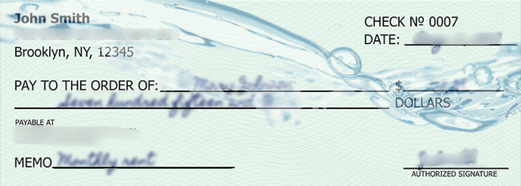
The altered check retains the original check number and the genuine signature, which is why it often clears bank fraud detection systems. The payee name and amount have been completely rewritten. On a physical examination of the check, chemical washing sometimes leaves subtle evidence - slight discoloration, a glossy sheen, or smearing of the rewritten ink - but these are difficult to detect without looking closely at the actual check document.
Victims typically discover check washing fraud when they review their bank statement and find a check cleared for an amount significantly higher than they wrote, or to a payee they do not recognize. The check number matches one they wrote, and their signature is on it - making the initial dispute with the bank sometimes difficult to initiate because everything looks legitimate at first glance.
Warning Signs
Check washing fraud is typically discovered after the fact, but these signals indicate it may have occurred or that you are in a high-risk situation.
- A check you wrote clears your account for an amount significantly higher than you wrote, or to a payee you do not recognize.
- You mailed a check but the intended recipient reports never receiving it - particularly if it was mailed through a blue USPS collection box or left in your residential mailbox with the flag up.
- Your account shows multiple check transactions you do not recognize, potentially indicating your account number was used to print counterfeit checks after being obtained from one stolen check.
- You live or work in an area where mail theft has been reported. Local law enforcement and USPS often issue alerts when organized mail theft activity is detected in a community.
- You regularly mail checks for large amounts - rent, contractor payments, tax payments - through residential or public collection boxes rather than directly at a post office counter.
Who Scammers Often Target
Check washing affects anyone who writes and mails paper checks. However, people who mail checks for large amounts - landlords collecting rent, homeowners paying contractors, individuals paying tax obligations - face larger potential losses from a single washed check.
People who regularly use blue USPS collection boxes for outgoing mail, particularly in areas with known mail theft activity, face elevated risk. The concentrated volume of checks in these boxes makes them attractive targets for organized mail theft rings.
Older adults who continue to manage finances primarily by paper check are more frequently affected because they write more checks and may be less likely to review their bank statements online within a day or two of mailing - which reduces the detection window.
What the Scammer Is Trying to Achieve
The goal is to convert a legitimate check into an unauthorized payment to themselves. By rewriting a check for a larger amount to a payee they control, the thief extracts money directly from the victim's bank account while using the victim's genuine signature as the authorization.
Check counterfeiting versions of this fraud pursue the same goal through a different method - using the account and routing numbers from one stolen check to print multiple counterfeit checks, potentially creating multiple unauthorized withdrawals from a single piece of information.
What To Do If You Encounter This Scam
If you discover a check on your bank statement that you do not recognize or that cleared for the wrong amount, here is how to respond.
- Contact your bank immediately and report the unauthorized transaction. Request a copy of the actual check image and compare it to your records - the payee, amount, and any physical appearance of the check.
- File a report with the US Postal Inspection Service at postalinspectors.uspis. Mail theft and check fraud are federal crimes and the USPIS actively investigates these cases.
- File a police report with your local law enforcement. Your bank will typically require a police report number to process the fraud claim.
- Consider placing a fraud alert with the three major credit bureaus if your account information may have been compromised beyond the single check incident.
- If the fraud involved a USPS collection box, report the specific location to your local post office so the box can be monitored or temporarily removed from service.
How To Prevent Check Washing Scams
Several practical habits dramatically reduce the risk of check washing fraud.
- Write all checks with a gel ink pen. Gel ink bonds to paper fibers in a way that resists the chemical solvents used in check washing. The Uni-ball 207 and similar gel pens are widely available and inexpensive.
- Mail checks directly at a post office counter rather than dropping them in a blue collection box or leaving them in your residential mailbox. Post office counters significantly reduce the theft window.
- If you must use a collection box, deposit outgoing mail inside the post office lobby during staffed hours rather than in the exterior slot, or use the USPS mail pickup service rather than leaving outgoing mail in your residential mailbox.
- Review your bank account statements - ideally online - within a few days of mailing any check. Early detection significantly increases your ability to recover fraudulently taken funds.
- Consider switching to electronic bill payment, wire transfer, or other non-paper alternatives for large regular payments - particularly rent, contractor payments, and tax obligations where the amounts are large and the mail theft risk is highest.
Final Safety Advice
Check washing fraud is unusual among financial scams in that it requires no action from the victim and no digital footprint - it happens entirely in the physical world, through the theft of a single envelope. The passive nature of the crime makes it easy to underestimate until it happens.
The protections are practical and low-effort: a gel ink pen for writing checks, depositing outgoing mail at a post office counter, and reviewing your bank account within a few days of mailing anything. These habits reduce your exposure substantially without requiring any significant change to how you manage your finances.
If you have been affected, act quickly on reporting to your bank and the USPIS. Banks have robust processes for handling check fraud claims, and acting within the reporting window is the most important factor in successful fund recovery. The USPIS actively investigates mail theft and check fraud, and your report contributes to investigations that may stop the same operation from affecting others in your community.