
Job Offer Scam
How fake employment opportunities steal your money, your identity, and sometimes your freedom by making you unknowingly commit crimes
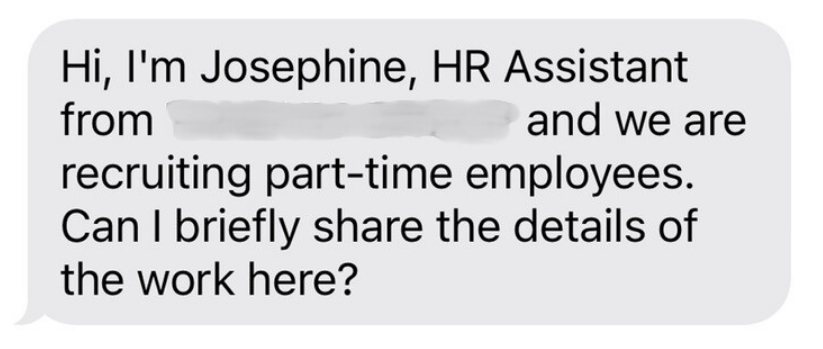
Job offer scams target people who are actively looking for work - making the offer feel like an answer to a real need. The consequences range from financial loss and identity theft to unknowingly participating in criminal activity as a money mule.
In This Guide
Overview of the Scam
Job offer scams present fraudulent employment opportunities - typically remote, flexible, and well-paying - that are designed to steal money, harvest personal information for identity theft, or recruit the victim as an unwitting money mule who processes payments from other fraud victims. The job appears real: there is an interview process, an offer letter, onboarding materials, and initial "tasks" to complete. The fraud reveals itself later, after personal information has been collected or financial harm has been done.
These scams are particularly effective against people who are actively searching for work because the offer arrives when they are most receptive. Someone who is unemployed, underemployed, or looking to supplement their income is more likely to respond quickly to an attractive job listing and less likely to slow down and scrutinize the details carefully.
The range of harm varies widely. Some job scams simply collect fees or personal information. Others turn victims into money mules - people who unknowingly process payments from other fraud victims, which can expose them to criminal liability in addition to financial loss.
How the Scam Works
Job offer scams follow a structured process that mirrors real hiring, making them difficult to identify until the harm has already occurred.
- A job listing appears on a legitimate job platform - Indeed, LinkedIn, ZipRecruiter, or Craigslist - or arrives as an unsolicited message or email. The listing describes a remote position with flexible hours and above-average pay for tasks that require minimal experience.
- An interview is conducted - usually by text, email, or messaging app rather than by video or phone call. The "interviewer" is enthusiastic and the process moves unusually quickly. An offer letter arrives within hours or days, often with a generous salary.
- Onboarding begins. The new "employee" is asked to provide personal information - Social Security number, bank account details, a copy of their driver's license - for payroll and tax setup. This information is used for identity theft.
- In the money mule version, checks arrive and the employee is asked to deposit them and forward a portion. In the task-based version, the employee completes online tasks - product reviews, app downloads, social media engagement - and is told payment will come after a certain number are completed, at which point a fee is required to "release" earnings that never materialize.
- Either the job disappears after personal information is collected, the checks bounce and the employee is held responsible for what they forwarded, or the task completion fee is taken with no earnings released.
Common Variations
Job scams take several distinct forms depending on what the scammer is trying to extract.
- Work-from-home check processing: The job involves receiving checks, depositing them, and forwarding money. The checks are fraudulent and bounce, but the forwarded funds are already gone. The employee may face legal exposure for processing fraudulent checks.
- Task completion scam: The job involves completing online tasks - reviewing products, liking posts, boosting app ratings. After a series of tasks, a fee is required to "release" the accumulated earnings. The fee is taken and the earnings never arrive.
- Upfront cost scam: The job offer requires purchasing equipment, training materials, or a starter kit from the employer. The materials are worthless or never delivered, and the job does not exist.
- Personal information harvest: The hiring process collects a Social Security number, bank details, and copies of ID under the guise of payroll setup. The job either disappears immediately or exists briefly before the employer becomes unresponsive, while the personal information is used for identity theft.
- Reshipping scam: The job involves receiving packages at home and reshipping them to addresses provided by the employer. The packages contain goods purchased with stolen credit cards, and the employee is unknowingly participating in receiving stolen property.
Example Scam Messages or Pop-Ups
The example below shows what a fraudulent job offer and onboarding communication typically look like. The professional formatting and familiar job offer language make these difficult to distinguish from legitimate employment at first glance.
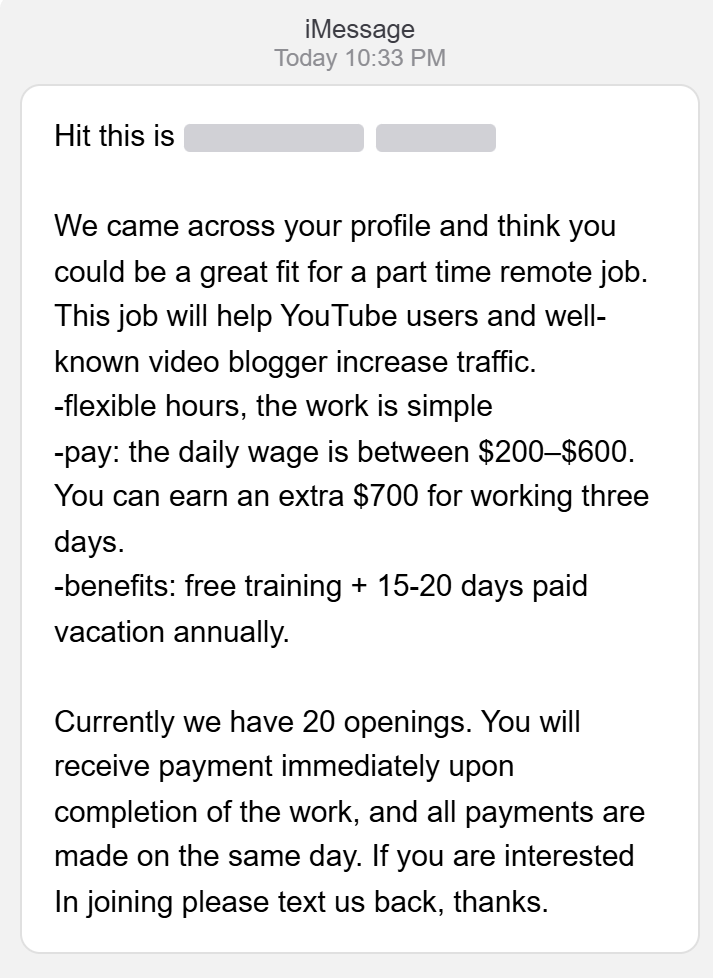
The offer letter uses corporate formatting, a specific salary, and standard employment language. The request for personal information is framed as routine payroll setup - which it would be in a real job. The fee or equipment purchase request is introduced after the relationship with the "employer" has developed enough to feel normal, making the request seem like a standard onboarding requirement rather than the red flag it is.
Typical job scam communications include: "Congratulations - you have been selected for our remote data entry team. Your starting salary is $25/hr. Please complete the attached W-4 and provide your bank account details for direct deposit setup," and "To begin your first assignment, you will need to purchase your initial supplies from our approved vendor - this cost is fully reimbursed in your first paycheck." Neither reimbursement nor the paycheck ever materializes.
Warning Signs
These signals indicate a job offer is fraudulent rather than a legitimate employment opportunity.
- The job was offered without you applying, or after minimal screening - an unsolicited message or a same-day offer after a brief text exchange.
- The pay is unusually high for tasks that require minimal skill or experience. Legitimate remote entry-level work does not typically pay $25-$50 per hour for simple tasks.
- The interview was conducted entirely by text or messaging app rather than by video or phone call. Legitimate employers almost always conduct at least a brief voice or video interview.
- You are asked to pay for anything - equipment, training, a background check, a starter kit - as a condition of starting work. Real employers never charge new employees upfront costs.
- The onboarding process asks for your Social Security number, bank account details, and copies of ID before you have done any actual work or signed a formal employment agreement with a verifiable company.
- The job involves receiving money and forwarding it - by check deposit, wire transfer, or cryptocurrency - to accounts provided by the employer. This is a money mule setup regardless of how legitimate the job description appears.
- The company cannot be verified - the website is new, the address is not a real business location, and searching the company name returns no credible information or generates scam complaints.
- A task completion fee is required to "release" your earnings after completing a series of assignments. Legitimate employers pay for work completed - they do not charge employees to receive their own wages.
Who Scammers Often Target
Job offer scams target people who are actively searching for employment - those who have posted resumes on job platforms, recent graduates, people who have been laid off, and anyone whose online presence suggests they are looking for work. Scammers scrape job platforms for active applicants and reach out proactively.
People looking for remote or flexible work are particularly targeted because remote work legitimately exists and the format makes verification harder. A job that requires you to come to an office can be verified by visiting that office - a remote job that operates entirely through messaging apps cannot.
People who are in financial difficulty and need income quickly are more likely to accept an offer without thoroughly vetting the employer, and less likely to be skeptical of details that do not quite add up when a salary is urgently needed.
What the Scammer Is Trying to Achieve
Job scams pursue several different goals depending on the type. Identity theft operations collect personal information - Social Security numbers, bank details, copies of government ID - and use or sell them. Fee-based scams collect upfront payments under various pretexts. Money mule operations use the victim to process payments from other scams, adding a layer of distance between the criminal and the money while also creating legal exposure for the victim.
Task completion scams have an additional purpose: generating fake engagement data for apps and social media accounts - which is itself a service sold to other businesses - while also collecting the final fee that the scammer takes from the victim.
What To Do If You Encounter This Scam
If you receive a job offer that raises any of the concerns described above, here is how to evaluate it safely.
- Research the company independently before providing any personal information or payment. Search the company name along with "scam" and look for a verifiable website, physical address, and established online presence that predates the job offer.
- Verify the job posting on the company's official website directly. If the company is real, the position should appear on their careers page. If it does not, the offer may be impersonating a real company.
- Never pay anything as a condition of employment. If a fee of any kind is requested before your first paycheck, stop the process immediately.
- Do not provide your Social Security number, bank account details, or copies of government ID until you have verified the company is legitimate and you have a signed employment agreement.
- If the job involves receiving and forwarding money, stop immediately regardless of how legitimate the employer seems. Report the situation to the FTC at ReportFraud.ftc.gov.
How To Prevent Job Offer Scams
These habits make fraudulent job offers much easier to identify before any harm occurs.
- Research every employer independently before providing personal information. Verify the company through their official website, check their presence on LinkedIn, and search for reviews and complaints before proceeding.
- Never pay anything as a condition of starting a job. Equipment, training, background checks, and onboarding materials are employer expenses - not employee expenses - in any legitimate job.
- Be skeptical of any job that was offered without you applying, arrived via text or messaging app, or went from initial contact to offer letter in less than 24 hours. Legitimate hiring takes more time and involves real people who can be verified.
- Decline any job that involves receiving and forwarding money, regardless of how the role is described. There is no legitimate remote job in which a new employee's primary function is processing financial transactions through their personal bank account.
- Verify video interviews. If an "employer" cannot do a live video interview with the camera on - offering only text or pre-recorded video - that itself is a significant warning sign.
Final Safety Advice
Job offer scams are particularly damaging because they target people at a moment of financial vulnerability and genuine need. Finding a good opportunity feels like a solution, and the excitement of a promising offer can make it harder to slow down and apply the same scrutiny you would in other contexts.
The two habits that protect you most are verification and the no-upfront-payment rule. Verifying the company independently before providing any personal information takes ten minutes and reliably distinguishes real employers from fraudulent ones. And the rule that no legitimate job requires you to pay anything before your first paycheck is absolute - there are no exceptions.
If you have already been affected, act quickly on protecting your identity and accounts, report the fraud, and be aware of your potential exposure if you processed payments or received packages on the employer's behalf. Speaking with a legal professional about your specific situation may be worthwhile if you believe you may have unknowingly participated in activity that creates legal risk for you.