Sweepstakes Scam
How fraudulent prize notifications trick people into paying fees to claim winnings that never exist
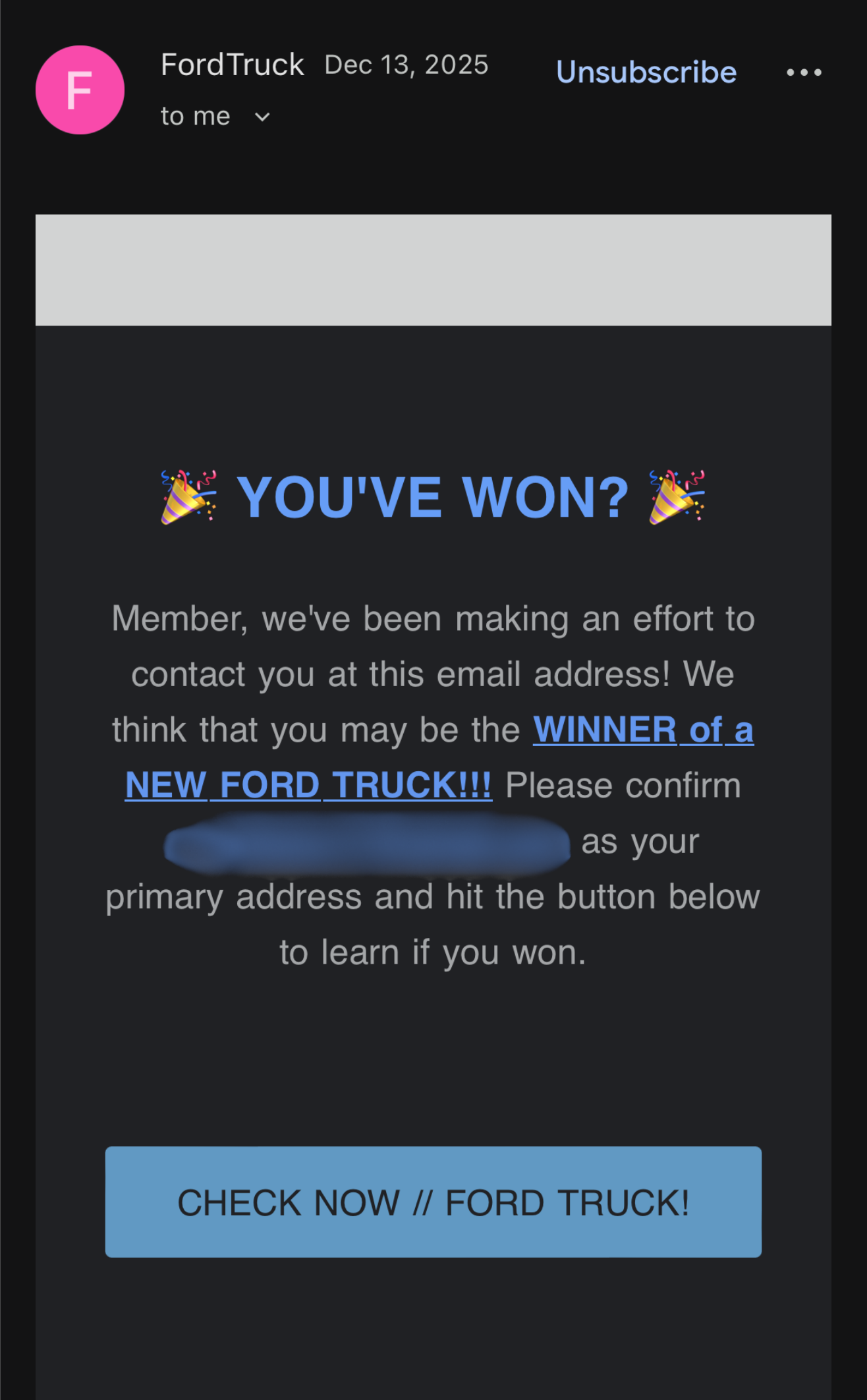
Sweepstakes scams begin with exciting news - you have won a large prize. The excitement is engineered to lower your guard so that when a fee is requested, it feels like a small price to pay for a major reward.
In This Guide
- Overview of the Scam
- How the Scam Works
- Common Variations
- Example Scam Messages or Pop-Ups
- Warning Signs
- Who Scammers Often Target
- What the Scammer Is Trying to Achieve
- What To Do If You Encounter This Scam
- If You Already Paid or Shared Information
- How To Prevent Sweepstakes Scams
- Final Safety Advice
Overview of the Scam
A sweepstakes scam begins with a notification - by mail, phone, email, or text - telling you that you have won a large prize. The prize is usually described as a lottery jackpot, a Publisher's Clearing House-style award, a vacation, or a significant cash amount. The message is designed to feel exciting and credible, often using official-looking seals, familiar brand names, or the names of real sweepstakes organizations.
The catch is always the same: before you can receive your winnings, you need to pay a fee. The fee is framed as taxes, processing charges, customs fees, insurance, or administrative costs. Once you pay, either the prize never materializes or a new fee appears, starting the cycle again.
In reality, you did not win anything. No legitimate sweepstakes or lottery requires you to pay a fee to claim your prize. The entire premise of the notification is false, and any money you send is gone. Understanding this one rule - real prizes never require upfront payment - is enough to avoid this scam entirely.
How the Scam Works
Sweepstakes scams are straightforward in structure, though the specific details vary by delivery method and claimed prize.
- You receive a notification stating you have won a prize. The notification may arrive as a letter with a check enclosed, a phone call, an email, a text message, or a pop-up on your computer. It often references a contest you may have entered at some point, or claims you were automatically entered through a purchase or registration.
- The prize amount is large enough to be exciting - typically thousands or even hundreds of thousands of dollars - but the notification emphasizes that you must act quickly to claim it. Deadlines create urgency that discourages careful thinking.
- A fee is introduced. It may be described as taxes that must be paid before funds are released, a processing or administrative fee, insurance on the prize, or customs charges to release a package. The amount is usually small relative to the claimed prize, which makes it feel like a reasonable trade.
- You are instructed to pay via wire transfer, money order, gift cards, or cryptocurrency. These methods are chosen because they are difficult or impossible to reverse or trace.
- After you pay, the promised prize does not arrive. Either the scammer claims additional fees are needed, the contact disappears entirely, or a new variation of the scam begins - such as claiming your winnings are being held by a foreign government and require a larger release payment.
Common Variations
Sweepstakes scams appear in several formats, each using slightly different framing while following the same underlying structure.
- Check and fee version: A letter arrives with a realistic-looking check for a portion of your winnings. You are told to deposit the check and wire the "processing fee" back to the sender. The check bounces days later, but the money you wired is already gone.
- Phone call version: A caller announces your winnings and instructs you to purchase gift cards and read the numbers over the phone to cover the release fee. This is one of the most common and immediate forms of the scam.
- Foreign lottery scam: A letter or email says you have won a lottery in another country - Canada, Jamaica, Spain, or another location - and need to pay taxes or fees to claim your international winnings. In most cases, US residents cannot legally enter or win foreign lotteries, making this premise impossible from the start.
- Social media prize scam: A post or message on Facebook, Instagram, or another platform claims a well-known company is giving away prizes and you have been selected. A follow-up message asks for personal information or a small fee to claim your reward.
- Government grant scam: Framed as a government grant or benefit rather than a sweepstakes, but following the same structure - you have been selected to receive money, but must pay a processing fee to receive it.
Example Scam Messages or Pop-Ups
The example below shows the type of notification used in a sweepstakes scam. These messages are designed to feel official, urgent, and credible.
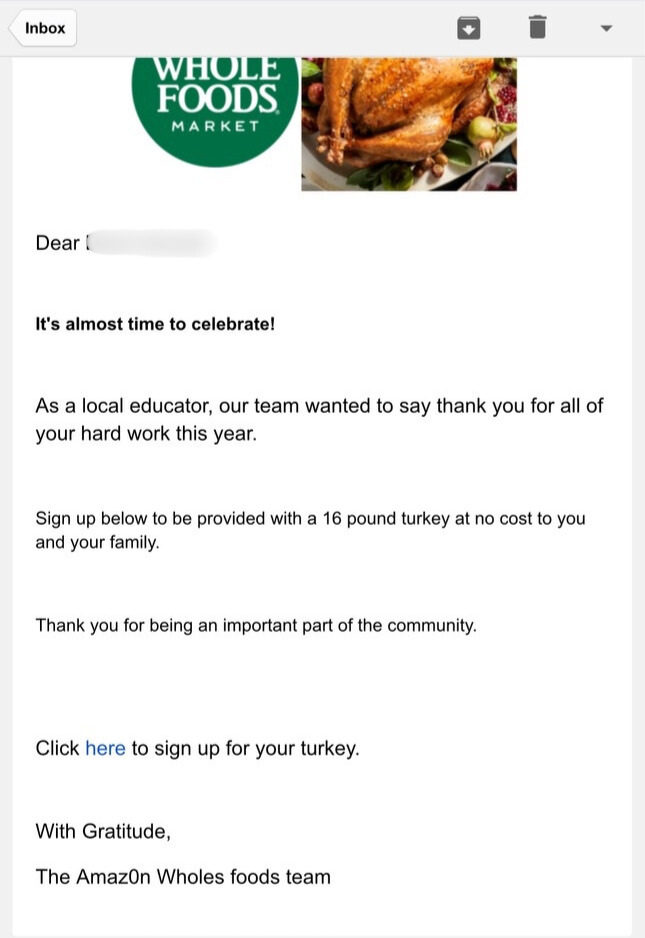
Notice the official-looking formatting, the large prize amount designed to create excitement, and the small fee that seems reasonable relative to the claimed winnings. The urgency of the deadline and the instruction to keep the win confidential are also common features. Real sweepstakes do not ask you to keep your win private or pay anything to receive your prize.
Typical language in sweepstakes scam messages includes: "You have been selected as the winner of $85,000 in our national drawing," "To release your funds, a processing fee of $299 is required within 48 hours," "This is a confidential matter - please do not discuss your winnings until funds have been received," and "Send payment via money order or gift card to the address below to receive your certified check."
Warning Signs
These signals reliably indicate a sweepstakes notification is fraudulent rather than legitimate.
- You are required to pay any amount - taxes, fees, processing charges, insurance, or customs - before receiving your prize. This never happens in a legitimate sweepstakes.
- You won a contest you do not remember entering, or were entered automatically through a purchase or registration you made at some point in the past.
- The notification creates urgency - you must claim within 24 or 48 hours or the prize will be forfeited. This pressure is designed to prevent you from stopping to verify.
- Payment is requested via gift cards, wire transfer, money order, or cryptocurrency - methods that cannot be reversed if the situation turns out to be fraud.
- The notification claims to be from a well-known organization like Publisher's Clearing House but the contact information does not match the real organization's official details.
- You are asked to keep your winnings confidential until you receive them. Real prize organizations have no reason to require secrecy.
- The return address, phone number, or email domain looks similar to but does not exactly match a known legitimate company.
- A check arrives with instructions to deposit it and wire back a portion. Real prize checks do not come with wire-back instructions.
Who Scammers Often Target
Sweepstakes scams target people broadly, but older adults receive a disproportionate share of sweepstakes-related mail and phone calls. Scammers use purchased mailing lists and phone directories to reach people who have historically engaged with legitimate sweepstakes mailings, and older adults are more likely to appear on these lists.
People who have responded to sweepstakes promotions in the past - even legitimately - may find themselves on lists that are sold to fraudulent operations. Responding once can result in years of follow-up contacts from scam operations.
People experiencing financial stress are also frequently targeted, because a large prize is especially appealing when money is tight, and the logic of paying a small fee to receive a much larger reward can feel compelling when funds are genuinely needed.
What the Scammer Is Trying to Achieve
The immediate goal is the fee payment. Because the prize appears to be large, even a small fee represents pure profit for the scammer - and victims who have already paid once are likely to pay again when a new fee is introduced, since they feel invested in receiving the prize they believe is coming.
Some sweepstakes scams also gather personal and financial information in the process - Social Security numbers, bank account details, or copies of ID documents requested under the guise of verifying your identity before releasing your prize. This information can be used for identity theft independent of any fee payment.
What To Do If You Encounter This Scam
If you receive a notification claiming you have won a prize and must pay a fee to collect it, here is how to respond.
- Do not pay any fee, regardless of how it is described. There is no legitimate scenario in which a real sweepstakes requires you to pay anything before receiving your prize.
- If the notification claims to be from a real organization - Publisher's Clearing House, a major retailer, or a government agency - look up that organization's official contact information independently and call to verify. Do not use any phone number or website provided in the notification.
- Do not deposit any check that arrives alongside a prize notification, especially if accompanied by instructions to wire back a portion. Contact your bank before depositing and explain what you received.
- Do not provide any personal information - Social Security numbers, bank details, copies of ID - in response to a prize notification you did not initiate.
- Report the notification to the FTC at ReportFraud.ftc.gov. If it arrived by mail, you can also report it to the US Postal Inspection Service, which investigates mail fraud.
- Discard the notification and do not respond further. Responding, even to decline, confirms that your address or phone number is active and can lead to more contact from scam operations.
How To Prevent Sweepstakes Scams
A few simple habits make sweepstakes scams easy to identify and dismiss.
- Remember the core rule: real prizes never require upfront payment of any kind. Taxes, fees, processing charges, insurance - none of these are legitimate conditions for receiving a genuine sweepstakes prize. Any request for payment is a scam.
- Be skeptical of any prize you did not knowingly enter. If you do not remember entering a contest, you almost certainly did not win one.
- Look up the organization independently before engaging. If a notification claims to be from Publisher's Clearing House or another real organization, verify by going directly to their official website or calling their publicly listed number.
- Be cautious about responding to sweepstakes mailings in general. Responding - even to legitimate promotions - can put your name on lists that are eventually sold to fraudulent operations.
- Discuss unusual prize notifications with a trusted family member or friend before taking any action. An outside perspective often makes the situation clearer.
- Never deposit a check that came with instructions to send back a portion of the funds. This is a fake check scam and the check will bounce regardless of how real it looks.
Final Safety Advice
Sweepstakes scams persist because the premise is emotionally compelling. Winning a large prize feels wonderful, and the request for a small fee in exchange for a much larger reward is structured to feel logical rather than alarming. That psychology is exactly what these operations are designed to exploit.
The rule that breaks this scam every time is simple: you never have to pay to receive a real prize. If a prize notification asks for money first, it is not a real prize. There are no exceptions to this rule, regardless of how official the notification looks, which company it claims to be from, or how specific the details appear to be about your personal history.
If you have received a notification like this and are uncertain, the safest thing to do is nothing - do not pay, do not provide information, and verify through independent channels before engaging. Legitimate winnings will still be there after a careful pause. Scam operations depend on you acting before you think.